A Day in Toledo from Madrid
12 min read
Toledo is the day trip Madrid does to itself, and it is also the day trip Madrid ruins. The fast train from Puerta de Atocha takes about thirty minutes. The old town then takes the rest of your legs. If the cathedral is the reason you are going, sleep one night inside the walls. The Madrid trains empty the streets after late afternoon, the stone cools, and the morning before the first Avant arrives is the hour the building was built for. We run that overnight from Zaragoza as a private day inside a Castile week, or as the day itself if a night is impossible. Flights are not included. The hotel is a three- to five-star house we confirm closer to the date.
The train that makes the day possible
Leave from Madrid Puerta de Atocha. Renfe's Avant, and some AVE trains on the same short hop, cover Madrid to Toledo in about half an hour. Chamartín is the wrong station for this trip; Chamartín is where you go when the day is Segovia. Buy a specific outbound and a specific return before you walk out of the hotel. The seats that look cheap in the morning are the ones other people already took. A plan to 'catch something back' is how a good Toledo day ends in a taxi on the autovía after dark. Check the last departure on the day you are actually traveling. Timetables move. We will not invent a last train for you here, because the one that matters is the one printed on your ticket.
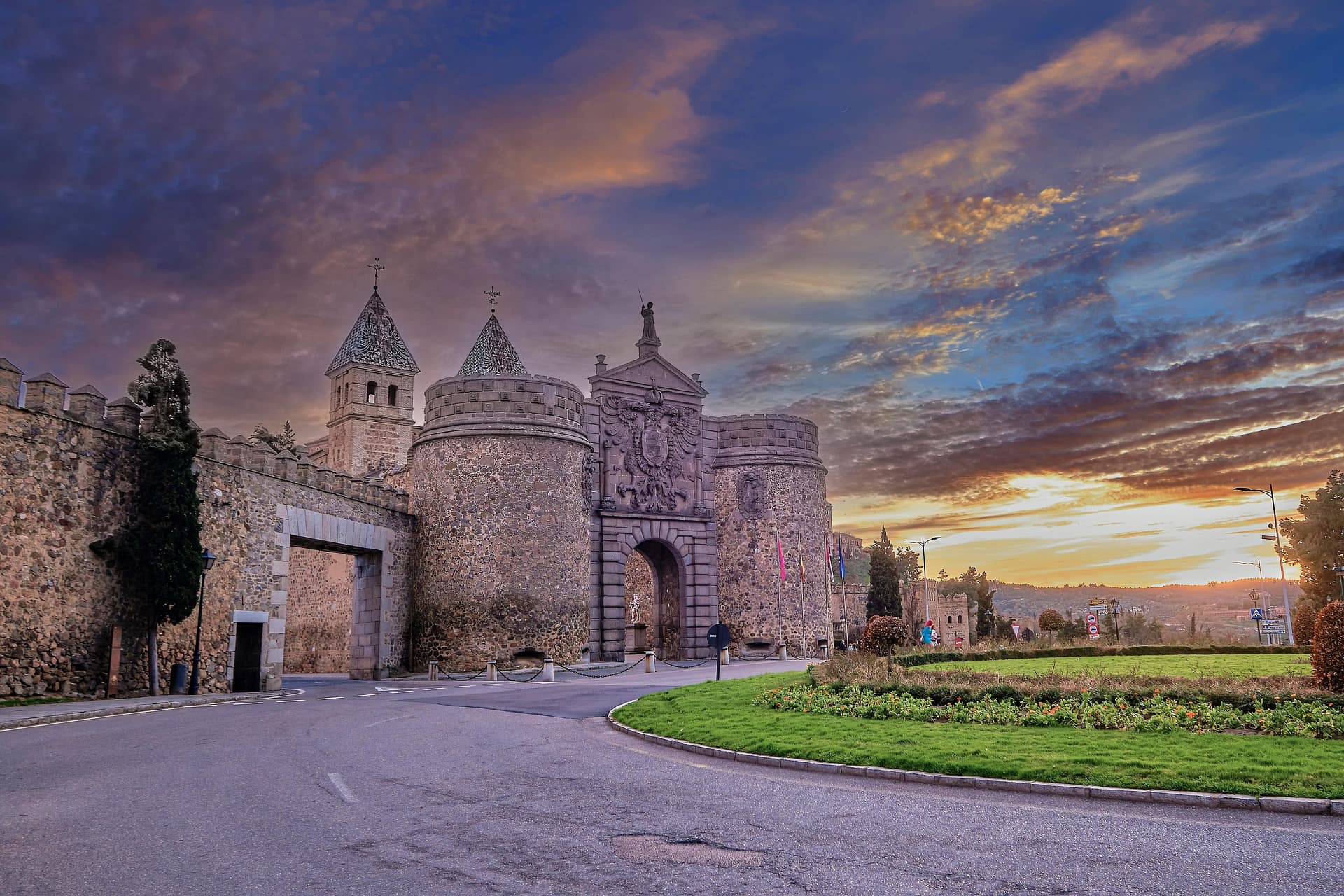
Toledo station sits below the old town, a modern hall at the foot of the hill. The cathedral is not outside the door. Take a taxi up, or the local bus toward Plaza de Zocodover, and start the day from the square. The ride is short. It is also the difference between beginning at the west facade and beginning with a wrong turn onto the ring road. If you are carrying a suitcase because you are staying the night, the taxi is the correct tool. The cobbles above the station are not a luggage walk, and the outdoor escalators from the lower car parks were built for people who parked, not for a wheelie bag and a deadline.
Leave the car below the walls
Do not drive into the medieval streets. A GPS pin on the cathedral will gladly send a rental car into a lane that was measured for a donkey and a priest. The old town is a hill of one-way stone, residents' doors, and delivery vans that already know the trick. Park in the lots below the walls and ride the outdoor escalators up — the Recaredo escalators are the set most drivers use — or skip the car entirely and take the train. Right-hand traffic, an International Driving Permit as a cheap backup beside a US license, and a careful reading of Madrid's low-emission zone matter on the way out of the capital. None of them will help you once you are wedged on a Toledo corner with a tour coach in the mirror.
If a private driver is bringing you, the drop is at a gate, not at the choir stall. You get out, you walk, and the car goes away until you call it. Private trips start at two guests. A small-group day, when we use one, is capped at twelve, which is already a crowd in Santa María la Blanca. Comfortable shoes with a sole that can take polished cobbles on a downhill will do more for the day than a second camera. Sandals are how people meet the Puente de San Martín.
The cathedral is the morning
The Catedral Primada is the reason Toledo is not a viewpoint with a gift shop. The west front, facing the town hall, is what people photograph from the square and then abandon. Buy the ticket and go in. The visit that is worth the train includes the choir, the treasury, the cloister, and the sacristy. The choir stalls are a carved book of the war of Granada. The treasury holds the great monstrance, the Custodia de Arfe, which leaves the building once a year for Corpus Christi and otherwise sits where you can walk around it. The sacristy hangs El Greco's El Expolio and a room of other paintings that are easier to see here than in a queue at the Prado. Give this a real morning. A lap of the nave and a selfie at the crossing is the visit we would rather you skipped in favor of lunch.
In the ambulatory, stop for the Transparente, Narciso Tomé's baroque altar that punches a hole through the Gothic vault so daylight can fall on the marble. It is the moment the building argues with itself, and it is easy to walk past if you are following a dot on a phone. The chapter house and the Mozarabic chapel matter if liturgy is your subject; they are optional if your feet are already voting for the door. Go early. By late morning in Holy Week, on a Saturday, or on any fine day in October, the ticket line at the side entrance is the tax you pay for arriving when every other Atocha train arrived. We book this when the trip is ours. If you are on your own, buy ahead and still get there when the doors open.
The two synagogues, if they are open
The Judería is the walk after the cathedral, or before it if your Santo Tomé slot is late morning. Two buildings carry the story, and they are not the same building twice. Santa María la Blanca was a synagogue, then a church, and the white horseshoe arches in five naves are the thing to stand under. It is small. Twenty quiet minutes are enough if you actually look up. The Sinagoga del Tránsito, built for Samuel ha-Levi in the fourteenth century, is now the Museo Sefardí. The stucco, the Hebrew inscriptions, and the women's gallery explain more about Jewish Toledo than any plaque on a restaurant door. See it if it is open. Do not promise it to yourself on a Monday without checking, and do not assume the long lunch leaves it staffed.
Between them, the lanes are the point: shade, a sudden view of the Tagus, a workshop selling damascene steel that you do not have to buy. Santo Tomé the confectioner, on the street of the same name, sells mazapán. The Iglesia de Santo Tomé, a short walk away, holds the painting. They share a name and nothing else. Eat the almond paste after lunch if you want it. Do not substitute it for the chapel. San Juan de los Reyes, the Isabeline monastery with iron chains hung on the outer wall, fits this walk if the synagogues were quick and your interest is still up. It does not fit if you have already decided the Alcázar is non-negotiable. Pick two of the three. The third is how the afternoon dies.
One painting is worth a timed plan
El Greco's The Burial of the Count of Orgaz, in the Iglesia de Santo Tomé, is the single work in Toledo we will rearrange a day around. It hangs in a side chapel of a small parish church, painted in the 1580s: the gentlemen of the city in black, Saints Stephen and Augustine lowering the count, the heaven above crowded with faces that were once neighbors. You do not need an art-history lecture to see that the picture is doing two things at once, a funeral and a court of heaven, in a room barely wider than the frame. You do need a ticket, and in busy months you need a time. Twenty to forty minutes is the right length. An hour of squinting after three hours in the cathedral is how people decide they 'don't like El Greco.'
Put it where your eyes still work. A sensible order on a day trip is cathedral first, while you are fresh and the building is still in morning light, then the painting, then the synagogues if the clocks agree, then lunch. If the only Santo Tomé slot is at noon, take it and let the synagogue wait until after coffee. The painting will not improve because you were thorough somewhere else. Flash, a guided talk shouted over another guided talk, and a rush to the Alcázar because someone is anxious about the train are the three ways to waste the chapel. Sit if there is a bench. The picture rewards a minute with your phone in your pocket.
- Cathedral at opening, with the choir and treasury included, before the second train from Atocha unloads.
- Santo Tomé while you can still look at a painting. Timed entry in busy weeks.
- Santa María la Blanca and the Tránsito museum if the doors are open that weekday.
- Lunch seated, between about 2 and 4, in the old town. Not a pastry standing in for the meal.
- One viewpoint on foot, then the station. The Alcázar only if the army museum is a real interest.
The Alcázar is a museum, not a skyline
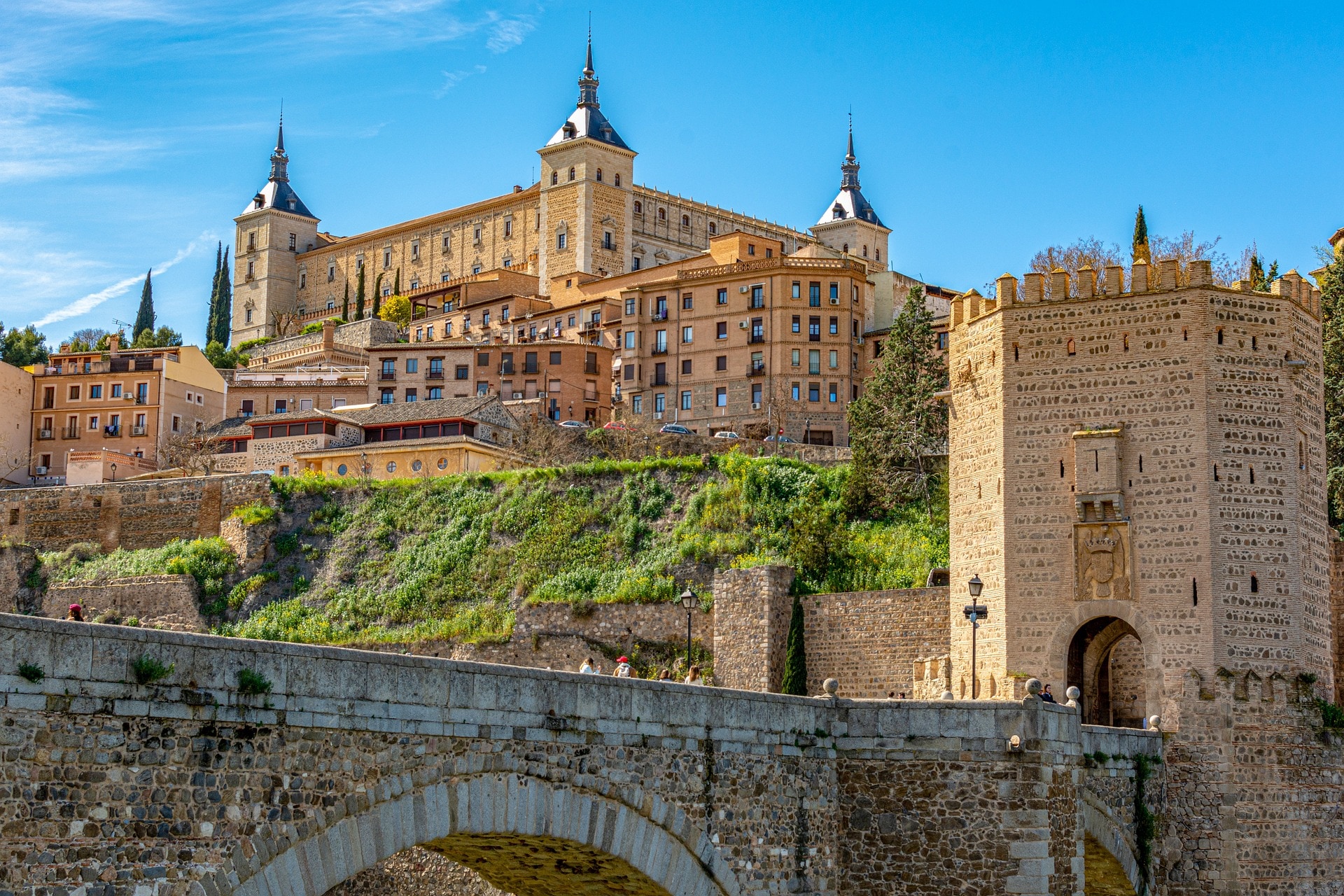
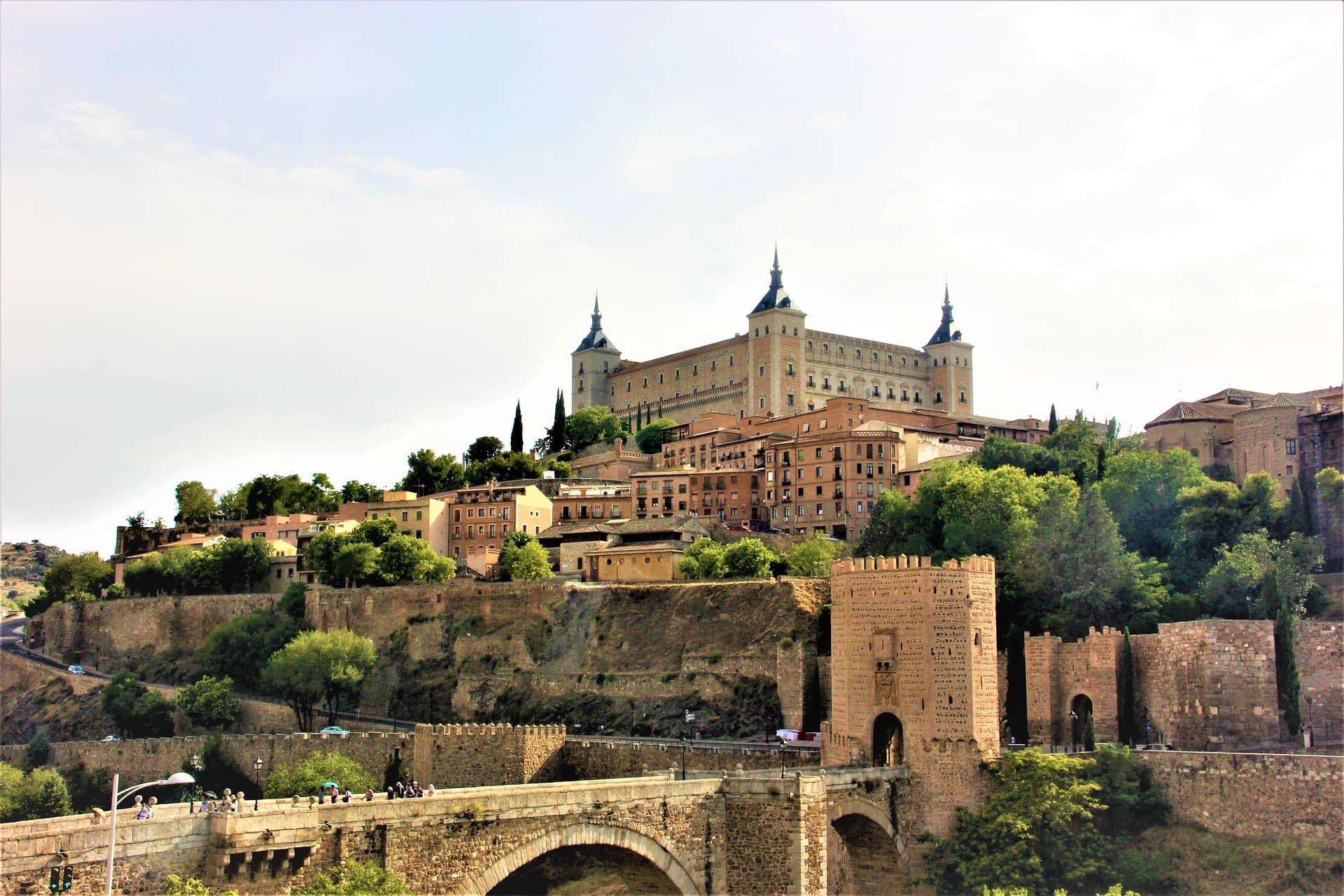
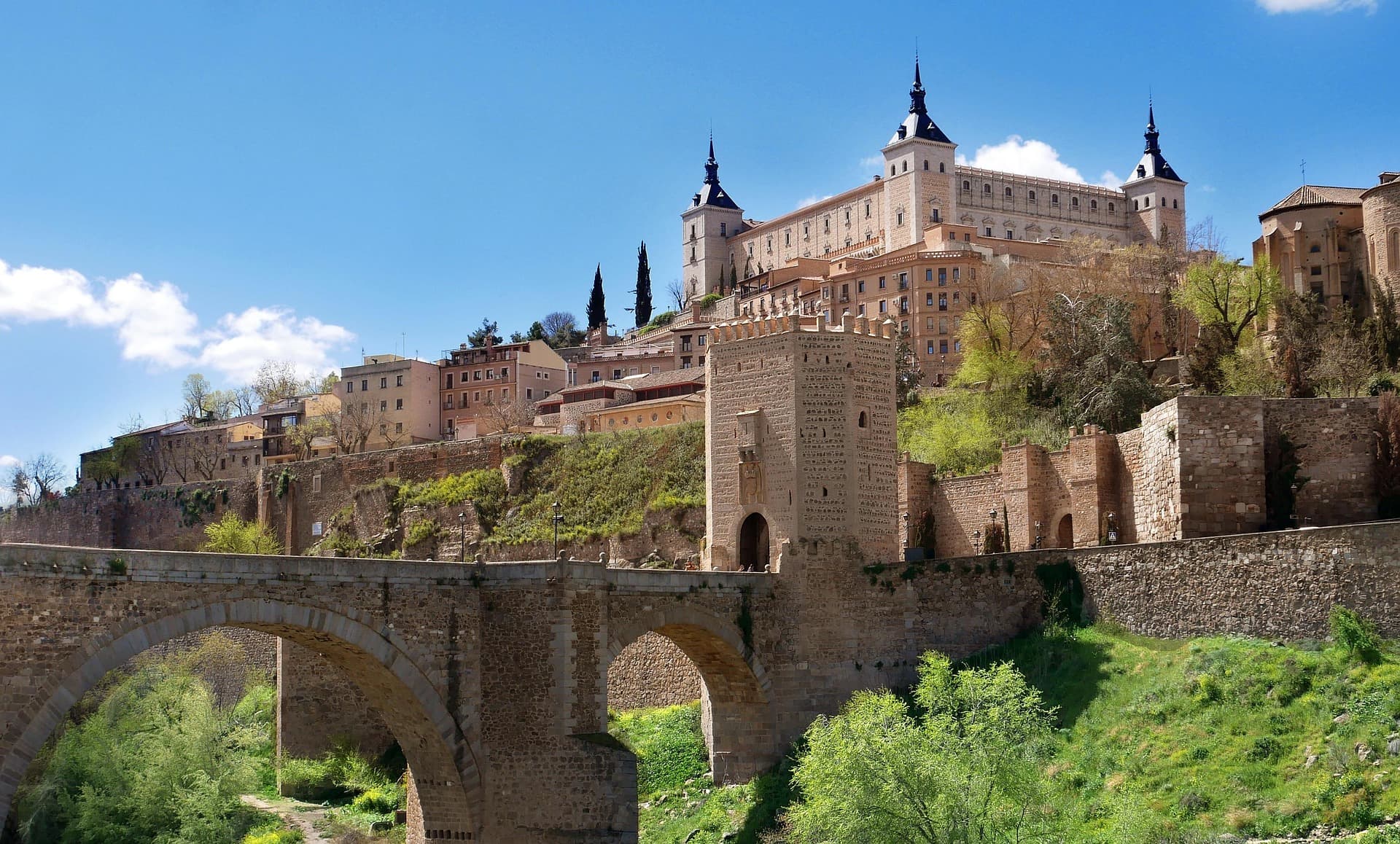
The Alcázar on the ridge is the building you see from every bridge, and inside it is the Museo del Ejército, Spain's army museum. The collection is large. The siege of 1936 is the story the walls are still telling, and it is heavy, specific, and worth it if military history is why you travel. It is the wrong third museum if you have just done the cathedral properly and your train is at six. We would rather you sit down to lunch. Skip it without guilt when the day is already full. Come back to it on the morning of an overnight, when the ticket is a choice and not a dare. The Museo de Santa Cruz, in the old hospital hall, is the same kind of choice: a fine second morning, a poor squeeze between the painting and the taxi.
A one-day shape from Madrid. An overnight moves the viewpoint to evening and gives the cathedral back its morning.
| Hour | Where you should be | What goes wrong |
|---|---|---|
| Morning train | Avant or AVE from Atocha, about 30 minutes | Leaving from Chamartín, which is the Segovia side of Madrid |
| Until early afternoon | Cathedral, then Santo Tomé | Photographing the west front and calling it the visit |
| About 2 to 4 | Lunch in the old town | A 12:30 tourist menu because the kitchen you wanted is still setting up |
| Late afternoon | Judería walk or one museum, not both | Adding the Alcázar out of duty when everyone is finished |
| Last light | A viewpoint on foot, then the station | A taxi scramble because the return was never chosen |
Lunch, then one view you can walk to
Eat in the old town, and eat at Spanish lunch hours, roughly 2 to 4. Kitchens that will feed you at noon are often feeding a day-trip schedule, and some of them are fine, but the table you want is the later one. Toledo cooks like the dry country it is: carcamusas, the local pork stew with peas; partridge; venison when it is on the board; Manchego; a Castilla-La Mancha wine if you are not driving. Mazapán from the Santo Tomé shop is a sweet for the train, not a meal. Do not try to run a Seville-style tapas crawl here. The hills punish a plan of eight small bars, and the kitchens are built around a seated lunch. If you are on a private day with us, we book the table. If you are loose in the lanes, sit down when the room starts to fill, not when you are already angry and sunburned.
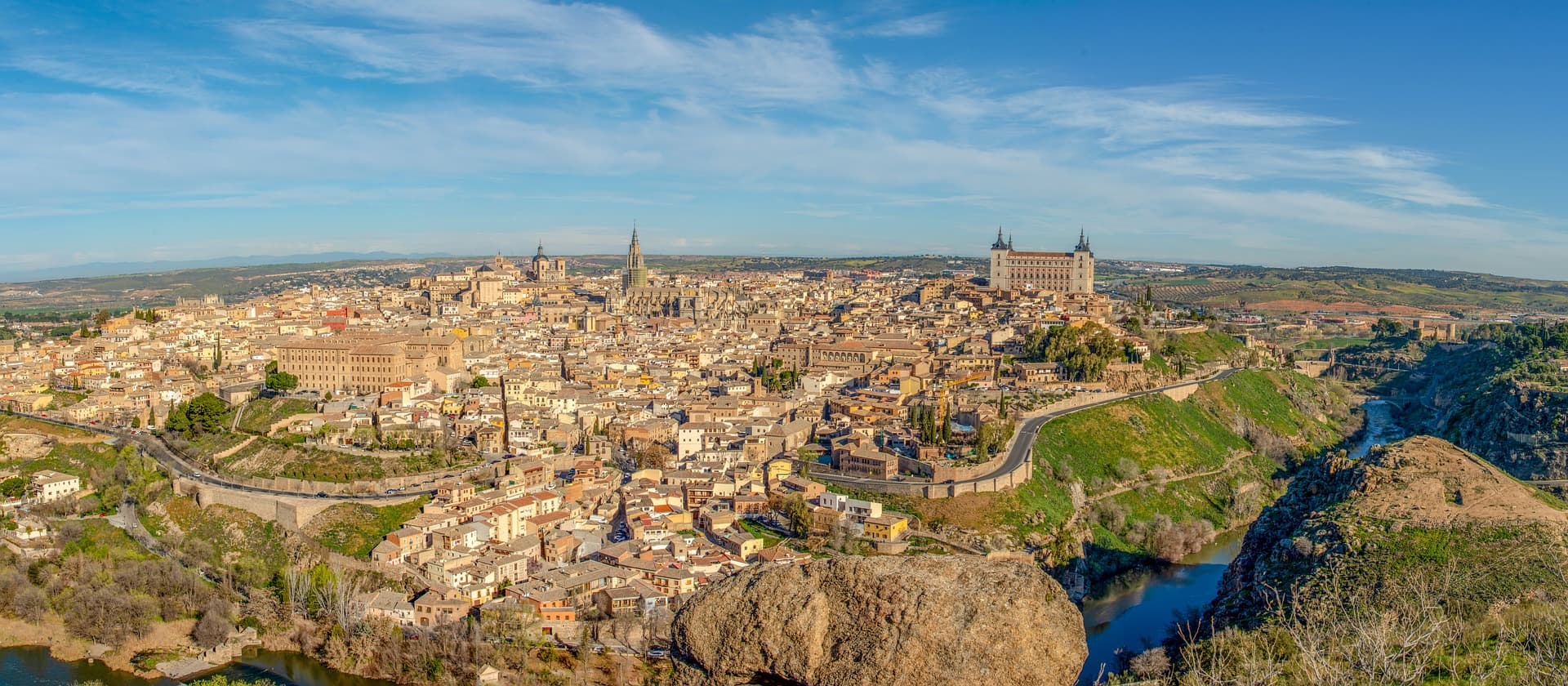
After lunch, walk to a viewpoint that does not require a car. The terrace of the Jesuit church, San Ildefonso, looks over the roofscape if the tower is open — check that day, and do not promise the climb to anyone who has already counted the cathedral steps. The Puente de San Martín, at the west end of the gorge, gives you the river and the walls without leaving the walking city. The Puente de Alcántara, below the Alcázar, is the other bridge, steeper to reach and better in late light. The Mirador del Valle, the classic postcard from the south bank of the Tagus, is a different errand. It sits on the ring road across the water. You need a taxi or a driver, and a plan to get back up. The ride is worth it on an overnight if you are sleeping on that ridge. It is a poor use of the last forty minutes.
"If the cathedral is why you came, sleep in Toledo. The day trip is a tour of your own hurry."— Spain 360, on the Atocha–Toledo hop
What does not belong on this day
Segovia and Toledo on the same date is the mistake we talk people out of every spring. Segovia's Roman aqueduct needs an unhurried hour just to stand under it, and the alcázar on its rock is a second building, and the road or the train goes the other way: Guiomar station from Chamartín, then a bus or taxi up to the aqueduct. You cannot do that justice and still be in Toledo's sacristy while your eyes work. Consuegra's windmills are a La Mancha drive, south toward Madridejos, a castle and a line of mills on a hill. They are a fine half day by car from Madrid or as their own outing. They are not a stroll you add after the synagogues, and the train back to Atocha does not pass them. Anyone who tells you to 'do La Mancha on the way back from Toledo' by rail is looking at a map, not at a timetable.
Heat is the other editor. In July and August the stone around Zocodover holds the sun, the cathedral is the cool room, and the walk down to either bridge will cook a person who skipped water. Spring and October are when a day trip feels like a pleasure. In winter the wind on the bridges is real, some smaller doors keep shorter hours, and the cobbles are wet. Go anyway if the cathedral is the point. We would rather cancel a shop than a synagogue.
Why one night changes the city
Stay if you can. The afternoon trains take Madrid home, and what is left is a walled town with its lights coming on and a cathedral you can walk past without a deadline. Dinner starts in earnest after 8:30 or 9, which on a day trip is exactly when you should already be at the station. With a hotel key, that hour is the point. A three- to five-star room inside the walls — the Jewish quarter, or a street back from the cathedral — means the evening walk is the way to the table. A room on the viewpoint ridge across the Tagus gives you the postcard from the window and a short taxi to the gates. We confirm the actual property closer to travel, once we know whether you want to be in the lanes or looking at them.
The next morning, before the first full train from Atocha, is for a chapel you missed, or for coffee in an empty square and the Tránsito if it was shut. Then you leave. Gems of Central Spain is the private week that uses this logic: Toledo on its own day, Segovia on a different morning, Ávila and Salamanca not asked to share a lunch. You still book your own flights into Madrid. We meet you, and we do not drive you into the medieval streets.
A Toledo day done well is a train, a cathedral ticket with the choir on it, one painting at Santo Tomé, a seated lunch, and a view you reached on foot with time to catch the return you chose that morning. If you stay the night, the city pays you back after the day-trippers leave.
Plan Your Spain Trip
Talk with our Spain-based team about small-group departures, private itineraries, and straightforward travel from the US—we handle the details.
Contact UsRecommended Journey
Gems of Central Spain
Seven private days from Madrid through Toledo, Ávila, Salamanca, and Segovia, with Toledo given a real day instead of a same-day collision with the aqueduct.
View the itineraryExpert's Tip
Buy the cathedral ticket that includes the choir, treasury, and sacristy, and book a timed slot at Santo Tomé for the El Greco. The west facade is the photograph, not the visit.
Get the Soul of Spain in Your Inbox
Join our curated list for exclusive travel stories, hidden jazz venues, and expert guides delivered once a month.