Ronda and the White Villages
12 min read
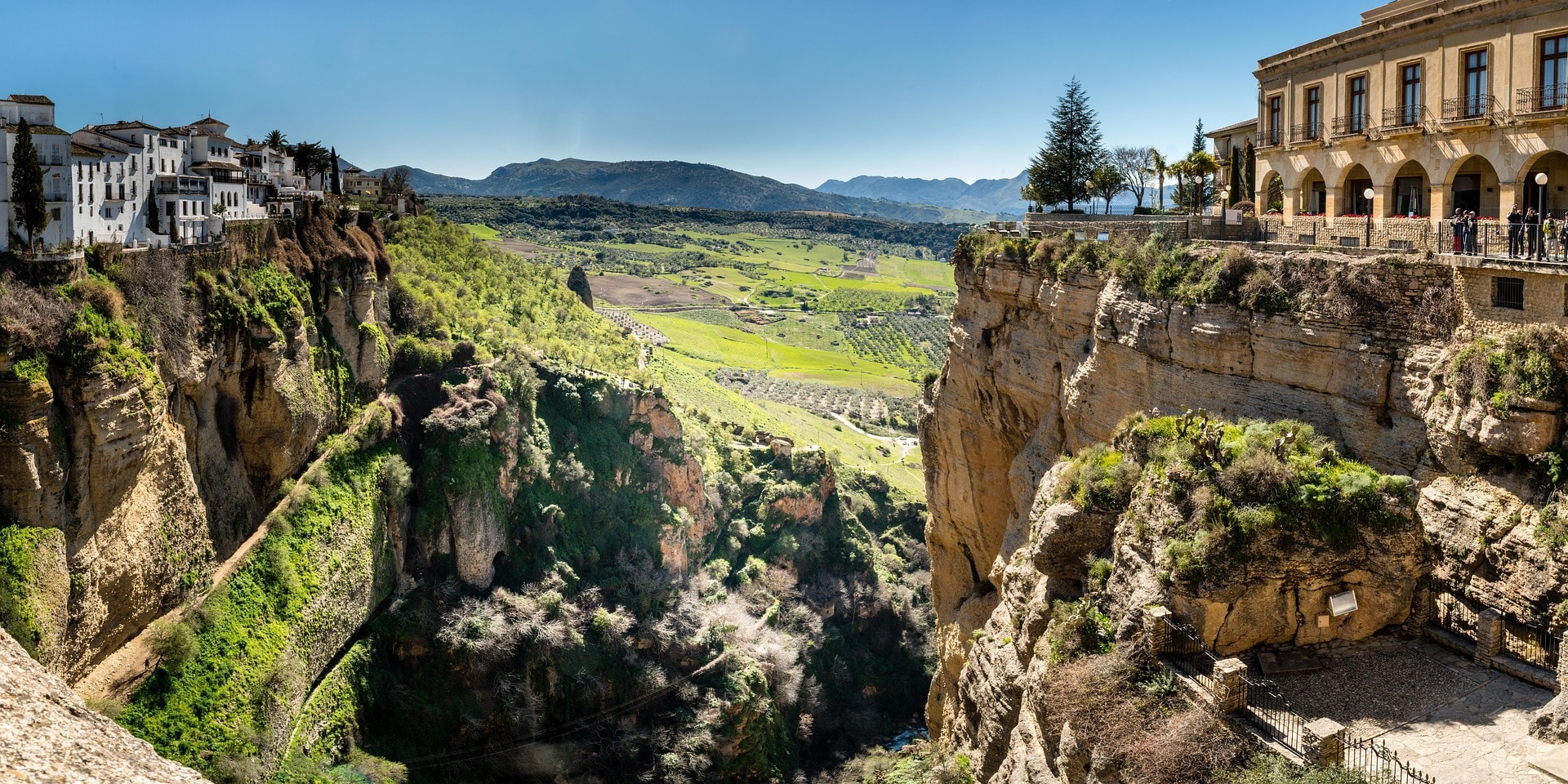
Ronda is not a coffee stop between Seville and Granada, though a lot of itineraries treat it that way and then wonder why the bridge felt like a parking lot. The Puente Nuevo is a late-eighteenth-century span over a gorge of the Guadalevín, and the town on either side of it wants a walk, a lunch, and a second look when the stone goes honey-colored. The white villages that justify the drive — Grazalema, Zahara de la Sierra, Setenil de las Bodegas, Arcos de la Frontera if you are entering from the Cádiz side — sit on mountain roads that look short on a phone and take most of a day. This is a private driver, or a confident driver, not a chain of public buses. Spain 360, which is 360 Travel S.L. in Zaragoza, builds it as two nights in Ronda inside a longer Andalusia week. Flights are not included. The hotel is a three- to five-star house we name closer to the date.
The bridge, the gorge, and which side you are on
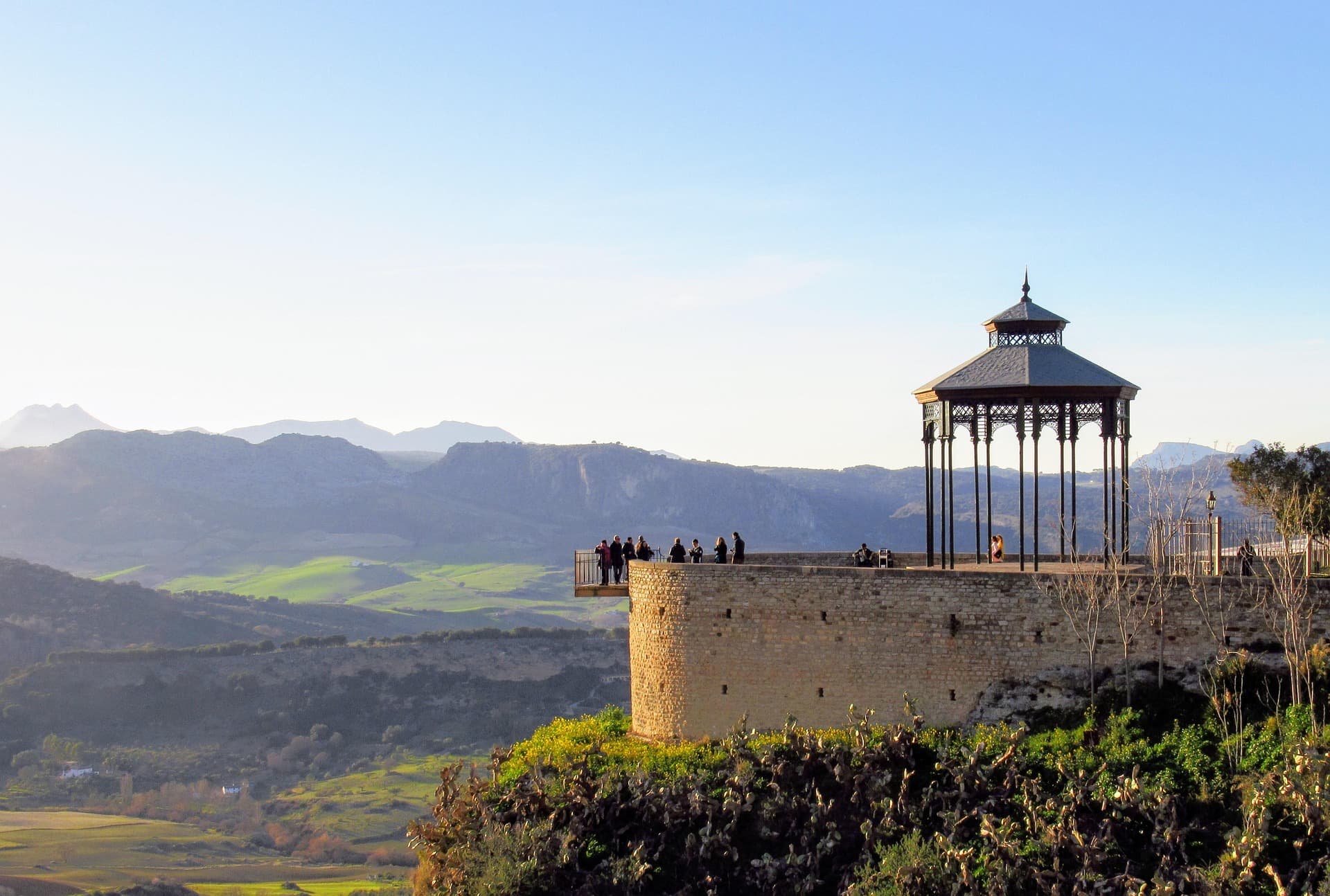
The Puente Nuevo was finished in 1793. The drop is the fact everyone quotes; the useful fact is that standing in the middle of the roadway is the worst seat in town. You are in traffic, the parapet is crowded, and the gorge is under your feet where you cannot see it. Walk out to the terraces. On the Mercadillo side, the Alameda del Tajo is a clifftop park with the long view back along the wall of rock. On the Ciudad side, the Jardines de Cuenca and the path that drops toward the Arab baths put the arch where it belongs, in the hole it was built to cross. There is a small interpretation room inside the bridge itself, entered from the plaza. Use it if you want the story of the construction and the chamber that was once a prison. Skip it if the light outside is already good and your people are restless.
Learn the two towns, because the map is one word and the walk is a border. Mercadillo, north of the bridge, is the newer commercial side: Plaza de España, the bullring, the hotels, the car parks, the streets where you will actually find a pharmacy. The Ciudad, south of the bridge, is the old town: walls, the Palacio de Mondragón, Santa María la Mayor on Plaza Duquesa de Parcent, the lanes that end in a view. Most day visitors park on the Mercadillo side, cross the bridge, glance, and leave. Stay long enough to walk the Ciudad when it is not a corridor. The Baños Árabes sit below the city on the river path. They are a short, steep, specific visit — horseshoe arches, a roof open to the sky in places — and they are worth it if the morning is cool. They are the wrong add-on at 1 p.m. in August, when the path is an oven and lunch is the thing you needed.
The bullring is optional, and the light is not
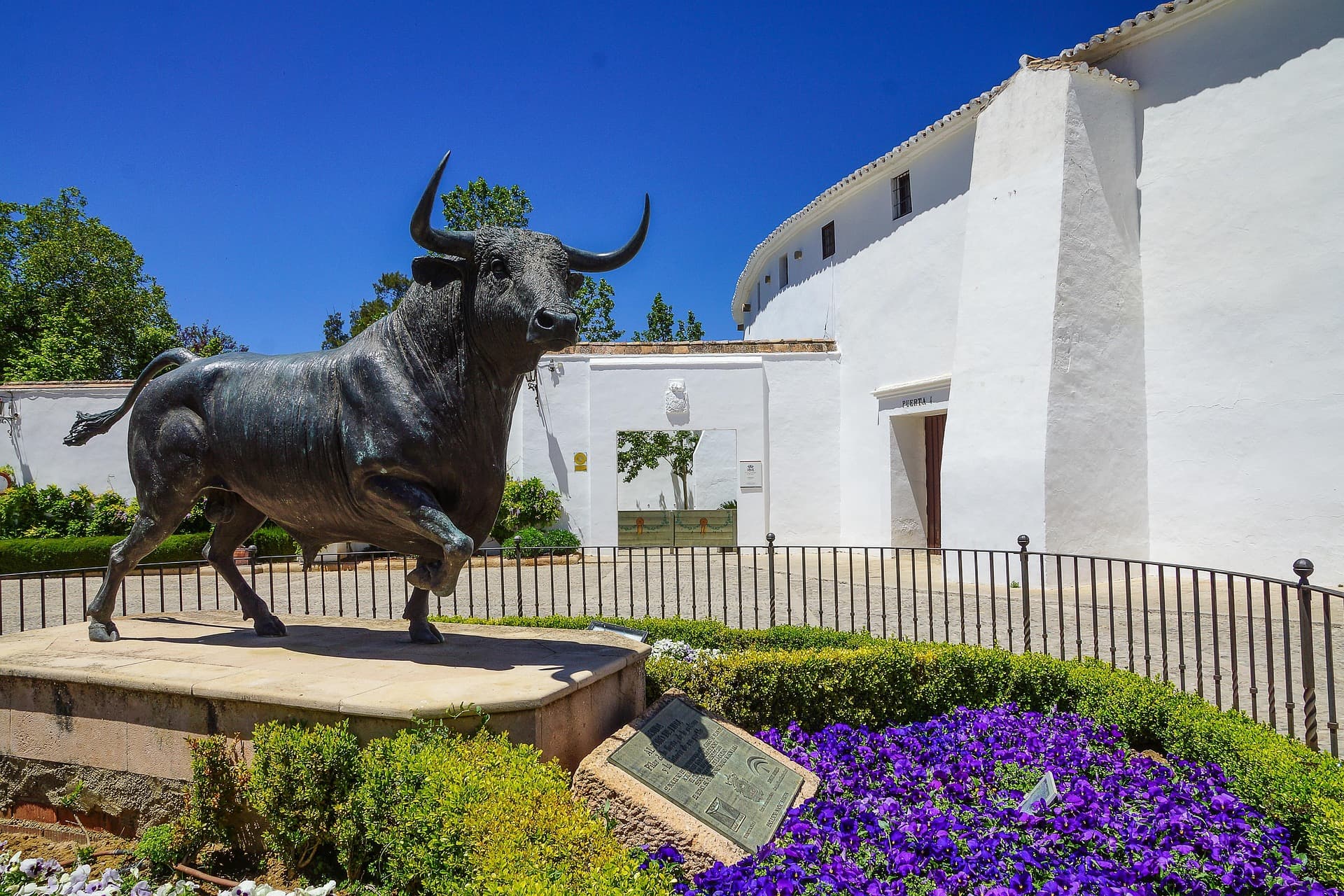
The Plaza de Toros de la Real Maestranza is one of the oldest rings in Spain, and the walk around the sand and the ornate barrier is a real twenty minutes if you care how a ring is built. It is not a moral requirement. If no one in the car wants it, do not buy the ticket out of completeness. There will not be a fight on an ordinary afternoon; the season is its own calendar, and a fight is something you go to on purpose or not at all. The money and the hour are better spent on the cliff walk or on getting out of town toward a village while the day is still wide.
Come to the bridge in the late afternoon if you can choose. Morning light is honest and fine for a first look, especially if you are leaving for Grazalema and will not be back until evening. Midday in July is white, hard, and full of people who are also hot. The hour before dusk is when the gorge wall turns the color the town is famous for, and when a second pass — Alameda first, then the Cuenca side — earns the walk you already did at noon. If you have only one night, arrive in time for that light and let the morning be the village or the departure, not a third lap of the same parapet.
Grazalema and Zahara, which the map lies about
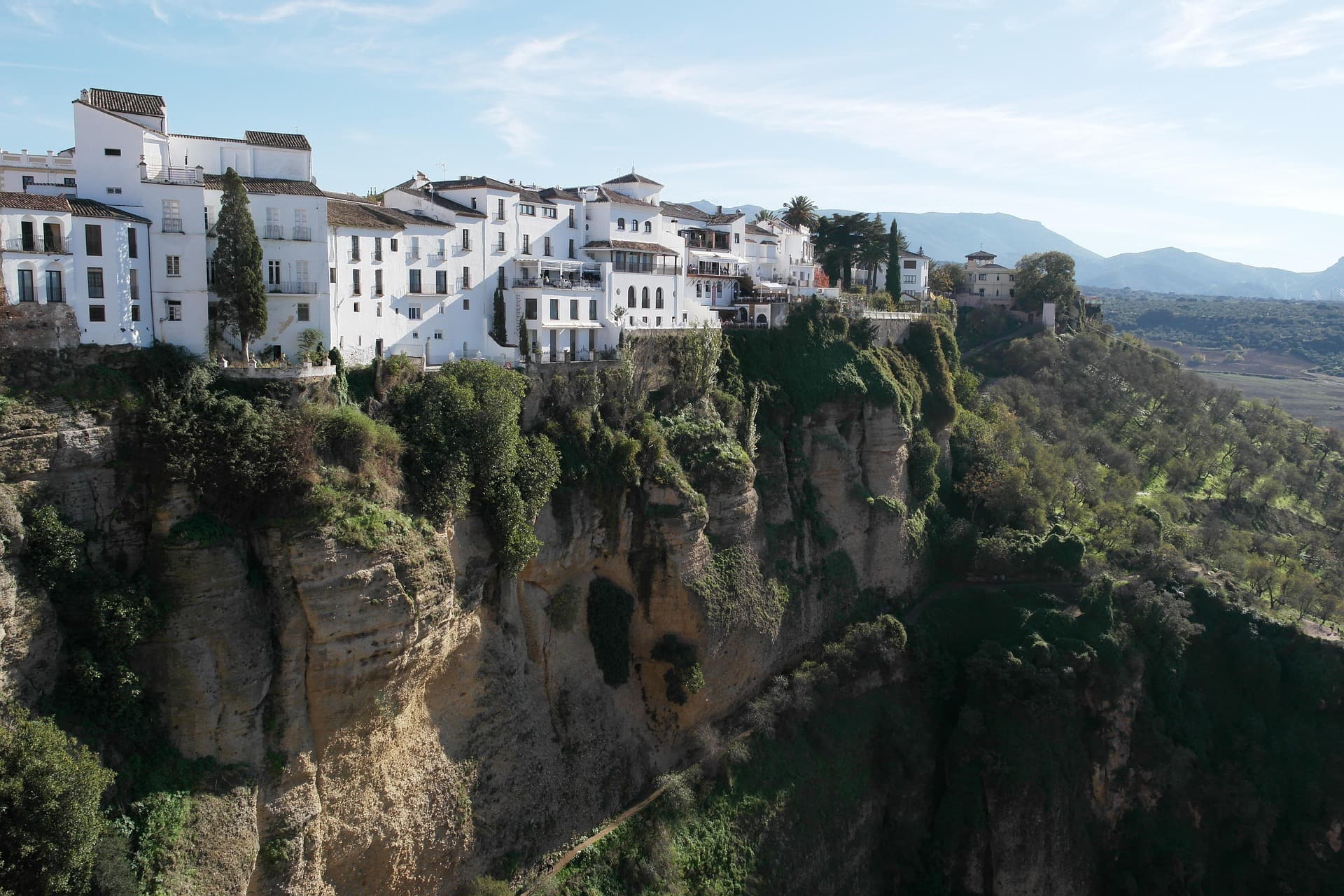
Grazalema is the white town at the wet edge of the Sierra de Grazalema natural park. The A-372 from Ronda is the pretty road and the slow one: bends, cyclists on weekends, a drop that your passenger will feel even if you do not. The kilometers look like a short hop. Give it the better part of an hour, longer if you stop, and do not schedule a second hard walk afterward. The town itself is a square, a church, a mirador, and lunch. The rare Spanish fir, the pinsapo, lives on these slopes. You will not 'see the park' by driving through the main street. A short marked walk is the version that matches a village day. A summit day is a different trip, with boots and a forecast, and it cancels Zahara.
Zahara de la Sierra is the castle rock above a reservoir that goes a startling turquoise when the water is up. From Grazalema the link is the high road over the Puerto de las Palomas, which is the scenic way and a slow way. The walk up to the castle is steep, exposed, and short enough that people in ordinary shoes attempt it and then complain. Do it in the morning, with water, or admire the rock from the square and sit down. The embalse is the view even if you never climb. Do not chain Grazalema, the castle climb, Setenil, and Arcos and call it relaxed. Two of those names are a day. Three is a rally. Four is how someone gets car-sick and misses lunch, which in these towns is not a small miss, because the kitchen often shuts until night.
Setenil under the rock, Arcos on the way in
Setenil de las Bodegas is not a white village in the postcard sense. The Río Trejo cut a slot through the limestone, and the houses on Calle Cuevas del Sol and Calle Cuevas de la Sombra use the overhang as a roof. You walk the sunny street, you walk the shaded street, you have a drink under the rock, and you leave. An hour is the visit. It is close to Ronda, closer than Grazalema, and it works as the first stop of a driving day while the air is still decent. It does not work as a place to kill a whole afternoon unless you specifically want to do nothing, which is allowed and which the town is good at. There is no monument you are failing to see. The street is the monument.
Arcos de la Frontera is the gateway, not the encore. The old town sits on a cliff above the Guadalete, Plaza del Cabildo at the tip, the parador terrace, the basilica, a lane system that is worse for cars than Ronda's. It makes sense when you are coming from Seville or Jerez and Ronda is tonight's hotel: you walk Arcos at the end of the morning, you eat, you drive on. It makes less sense as a late add after a Grazalema day. The road back toward Ronda is longer than people budget — treat it as well over an hour, often closer to an hour and a half depending on the route you actually get — and arriving at dusk into both a cliff town and a gorge town is how the day unravels. Olvera, if you have a second village day, is the other direction: a castle on a rock, white houses, olive country, and the Vía Verde de la Sierra if someone wants an easy rail-trail walk toward Puerto Serrano. That is a day with a picnic or a long lunch. It is not a twenty-minute detour.
- Night one in Ronda: arrive for late light on the gorge, dinner in town, no village tacked on.
- Village day: Setenil in the morning, then Zahara or Grazalema, lunch seated between 2 and 4.
- Skip the bullring without guilt if the cliff walk is what people came for.
- El Torcal de Antequera only if you are driving up from Málaga and you can give the rocks two hours.
- Night two in Ronda so you are not crossing the mountains to a new hotel after a mountain day.
Two nights, and the blur to refuse
The shape that works is dull in the best way. Night one: you arrive in Ronda in time for the bridge in good light, you walk the Ciudad, you eat. Day two: a driver, or you if you are honest about mountain roads, takes Setenil and one of the high villages, with lunch in Grazalema or Zahara, and you sleep again in Ronda. Morning three: you leave toward Granada, or toward Seville if the route runs that way, when you are fed and the car is not a last-minute idea. Classic Andalusia is built like that. Seville gets its days. The white villages and Ronda get the day between. Granada and the Alhambra are not asked to share the date with a gorge you only saw from a bus window.
The shape that fails is Seville and Granada with Ronda as a blur in the middle. Seville to Ronda is already a real morning by road. Granada to Ronda is a longer one: motorway, then the drop through the mountains, a drive that eats the hours you thought you would spend in the Alhambra gardens or under the Mezquita's arches on some other plan. Doing both cities and the bridge on one date means someone is always in the car at the hour the place you came for is at its best. We will not sell that day. If you only have a single night, sleep in Ronda, see the bridge at dusk and again in the morning, and let the villages go. A bridge you actually stood beside beats four towns you photographed from a passenger seat.
Distances on these roads run long. A private driver or a confident driver is the tool. Village buses will not build this day for you.
| Stop | What it actually is | Give it |
|---|---|---|
| Puente Nuevo and the two rims | A walk, not a drive-by | Late afternoon on the day you arrive |
| Setenil de las Bodegas | Two streets under the rock | About an hour, morning of the village day |
| Zahara de la Sierra | Castle rock and the reservoir | The climb or the square, not both plus a summit |
| Grazalema | A small town at the edge of a wet park | Lunch and a short walk, not a hiking expedition |
| Arcos de la Frontera | A cliff-top gateway from Cádiz province | The way in from Seville or Jerez, not a fifth stop |
Mountain food, and a car that stays outside
Eat mountain food. Rabo de toro, kid, asparagus, a thick olive oil from the sierra, goat cheese, a simple salad that tastes like the oil and not like a garnish. This is not a Seville tapas crawl, and it will disappoint you if you try to make it one. The towns are small. The good lunch is a table from about 2 to 4, and at 5 the shutters are down because Spain is between services, not because the village has died. Dinner, if you are in Ronda for the night, starts in earnest after 8:30 or 9. A village you are only driving through will often not feed you at 6:30 at all. Plan the meal as a stop with a name, not as something you will 'find later.'
Park outside the old towns. In Ronda, use the lots by the Alameda and the public car parks at the edge of Mercadillo, then walk across the bridge. Do not take a rental car into the Ciudad because a hotel pin looked close. In Grazalema, Zahara, Setenil, and Arcos, the entrance of the town is where the car belongs. The lanes are for people who live there and for you on foot. Right-hand traffic, and these are not the places to learn a mountain road at dusk in a car you do not know. Autovías on the bigger hops are usually the free roads; if a route puts you on an autopista, assume it may be tolled and budget the time at the booth. A private driver is the right call when anyone wants to look out the window. We drive this day on private trips from two guests. Old towns and rental cars fight each other here more than almost anywhere in Andalusia.
"The A-372 does not care what your map's travel time said. Grazalema is a mountain road with a town at the end of it."— Spain 360, on the white-village day
Spring green, summer heat, and El Torcal
April and May are when the Grazalema park looks like the reason the park exists: green slopes, the pinsapos dark on the ridge, wildflowers, a town you can walk at noon. Grazalema is also one of the wettest corners of Spain. A clear spring day is a gift, not a guarantee. Bring a layer even when Seville that morning was hot. July and August are a different country. The whitewash throws the sun back at you, the castle climb at Zahara is a midday mistake, and the correct shape is an early Setenil, a long lunch, a quiet hour, and the bridge after five. Winter can be cold on the gorge and beautiful in low light, with some village kitchens closed midweek. If you come then, sleep in Ronda and treat the high road as a fair-weather option you confirm that morning.
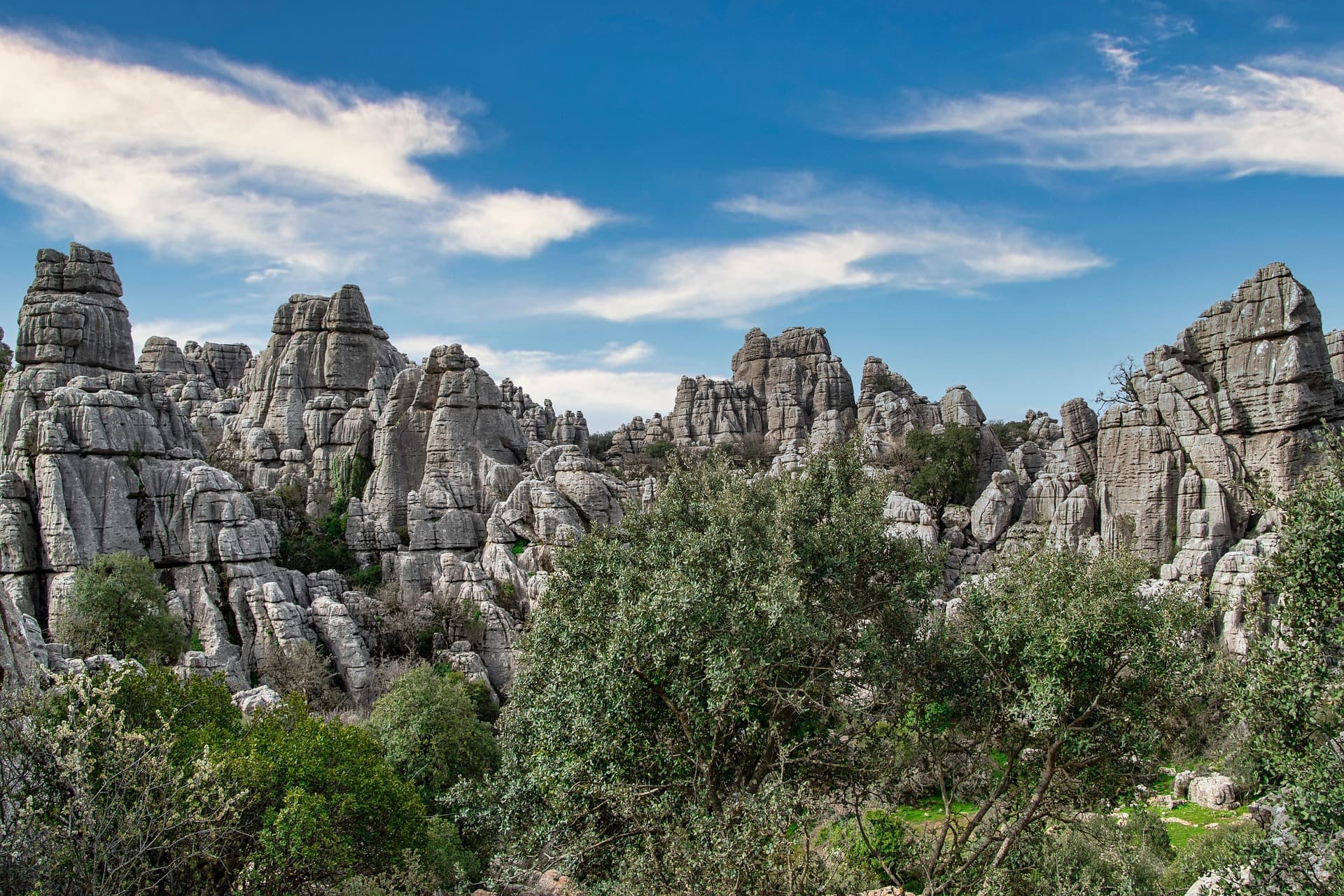
El Torcal de Antequera is the limestone labyrinth on the way up from Málaga, not a fifth white village. The marked walks — the green and yellow loops among the rocks — need about two hours if you actually walk them, plus the drive off the main road. Add it only when Málaga is where the day starts and Ronda is where the day ends, and you are willing to arrive at the gorge in the afternoon. Do not glue Torcal onto a Grazalema loop. They sit on different sides of the mountains. The Antequera dolmens are another stop again. Leave them for a Málaga day of their own.
Who this day is for
This is a driving day. Trains and buses reach Ronda from Málaga and from the Seville side, and they are a fair way to arrive if the town itself is the whole point and a driver will meet you. They are a poor way to see Grazalema, Zahara, and Setenil, because the point of those towns is the sequence and the stops, and the bus is not going to wait while you walk Calle Cuevas del Sol. If no one in the group wants to drive mountain roads, book the private day and sit in the back. If someone loves to drive and is honest about narrow roads, the keys are fine, and the International Driving Permit is still a cheap backup beside a US license.
Private trips start at two guests. Hotels stay in the three- to five-star range and get named when the date is close, inside Ronda rather than on a highway exit. You book your own flights. We leave the bullring off the list when nobody asked for it, and we take the mountain roads at the speed they actually allow.
See the Puente Nuevo from the side, sleep in Ronda, and spend the next day on one mountain loop with a real lunch. Leave Arcos for the way in, Olvera for a second day, and El Torcal for the drive up from the coast.
Plan Your Spain Trip
Talk with our Spain-based team about small-group departures, private itineraries, and straightforward travel from the US—we handle the details.
Contact UsRecommended Journey
Classic Andalusia
Seven private days through Seville, the white villages, Ronda, Granada, and Córdoba, with the gorge town given its own night instead of a windshield hour between cities.
View the itineraryExpert's Tip
Stand off the Puente Nuevo, not only on it. The gorge reads from the Cuenca gardens and the Alameda cliff, and the light is kindest late in the afternoon.
Get the Soul of Spain in Your Inbox
Join our curated list for exclusive travel stories, hidden jazz venues, and expert guides delivered once a month.