What to Pack for Spain, by Season and by City
12 min read
Packing for Spain is not one suitcase. A March week in Madrid and Seville, a July week in the Albaicín, a July week on the Cantabrian coast, and a January week of Three Kings in Madrid are four different bags. The common pieces are boring and nonnegotiable: walking shoes you have already worn, a layer for churches and for evenings, medications in the carry-on, and a plug adapter for 230 volts. Spain uses Type C and Type F, the two round pins. Your phone charger almost certainly wants an adapter, not a converter. The rest of the bag should match the itinerary you actually booked, not the Spain you might take someday. On a 14-day or 21-day tour, laundry mid-trip beats a second suitcase you will hate at Toledo’s station.
Shoes are the whole game
Toledo’s lanes, the Albaicín, Córdoba’s Judería, Santiago’s stones, Palma’s old center, Ronda’s sloping streets: all of them are cobbles, polished stone, or both, and several of them are hills. A shoe with a thin sole and no tread is how you watch the Mezquita from a bench you did not plan to sit on. Break the pair in on real walks at home, including a day long enough to find the hot spot. One pair is the goal. If you insist on a second, make it the same kind of shoe, not a fashion experiment. Sandals are for the hotel courtyard and, if the itinerary truly includes it, a beach in Málaga, Valencia, or on Mallorca. They are a poor choice for the Generalife slope at noon and a worse one for wet granite in Santiago. If the Grand Tour takes you from the meseta to Galicia to Andalusia, the shoe that can do all three is the shoe you pack.
A second pair of dress shoes is the item we watch people pack and never wear. Serious restaurants in Madrid, Seville, and San Sebastián care that you look as if you meant to be there. They do not require a gown, and they rarely require a man’s jacket at the tables our guests actually book. One nicer outfit is enough: a shirt you are glad you brought, trousers or a dress you can also walk back to the hotel in, shoes that survive the cobbles between the restaurant and the door. If you have reserved a dining room that does want a jacket, we will say so when we book it. You will not discover a black-tie rule at the Alcázar. Leave the extra heels. They spend the trip at the bottom of the suitcase, next to the drone you also should have left.
Pack the column you are actually traveling, not all four.
| Spring city | Summer south | Summer north | Winter | |
|---|---|---|---|---|
| Where | Madrid, Seville, Córdoba, March–May | Andalusia, June–September | Picos, Galicia, Basque coast | Inland cities, Christmas, early January |
| Shoes | Broken-in walkers with tread | Same shoes. Sandals only at the pool or a real beach | Tread for wet stone in Santiago | Tread. Polished stone is slick after rain |
| Layer | Scarf plus a light jacket. Churches are cold | Scarf for shoulders. Hotel air conditioning is cold at dinner | Fleece for the Picos even in July | A coat you would wear in a cool March at home |
| Rain and sun | Packable rain jacket. Afternoons turn | Sun hat. Storms happen, but heat is the main event | A real light rain jacket, not a fashion shell | Rain layer. Wind on the meseta in Toledo and Segovia |
| Evening | One smarter outfit if you booked a serious dinner | Linen or cotton you can walk in. Not wool | The same outfit. Restaurants are not casual-only | The smarter layer can be the warm one |
Churches, the Mezquita, and the layer you think you will not need
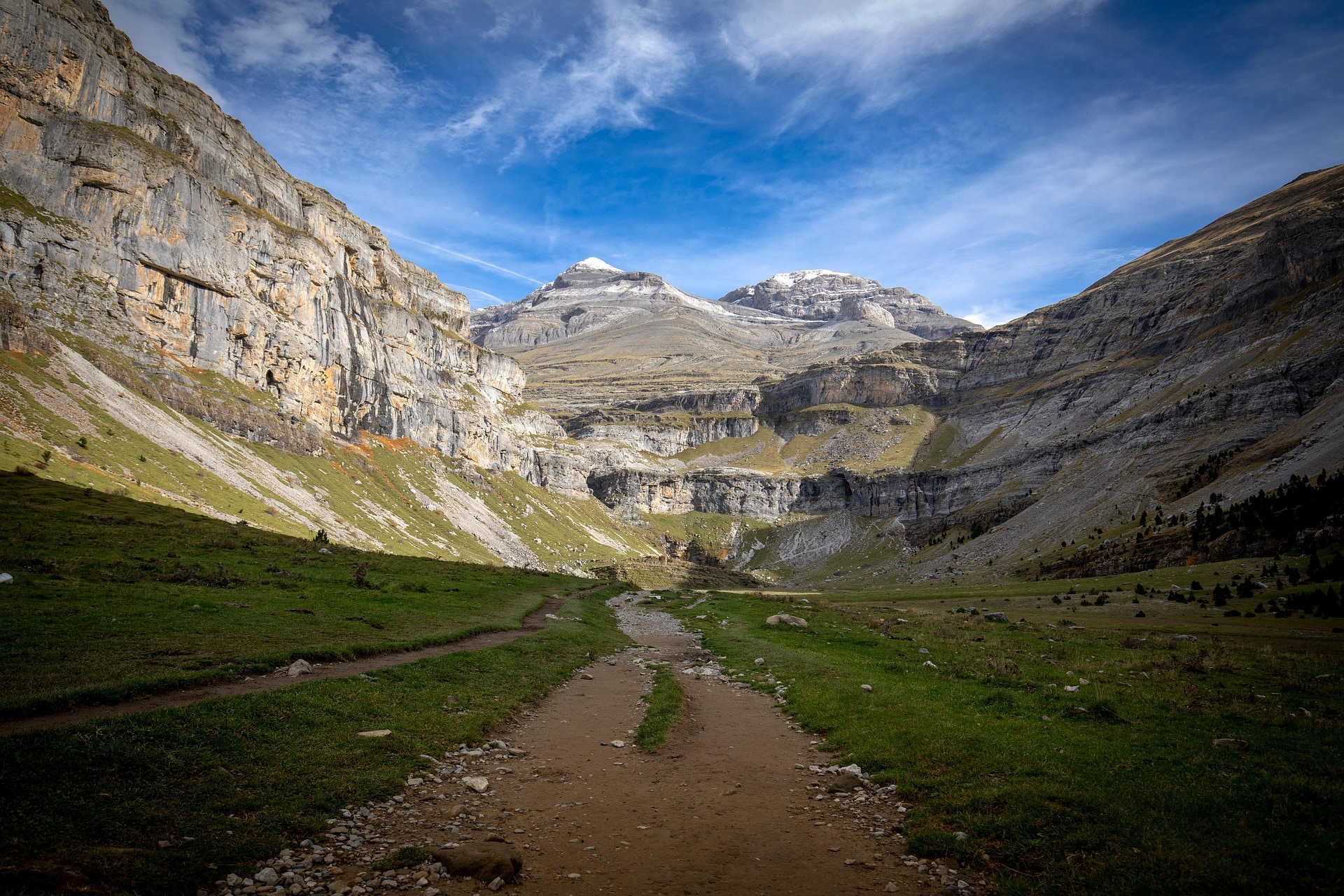
Cathedrals and the Mosque-Cathedral in Córdoba are cooler than the plaza outside, even in June, and they are more comfortable with covered shoulders and knees. Enforcement varies. Some doors wave you through. Some turn you back to buy a paper scarf you did not want. Err polite. A scarf or a light shirt in the daypack solves Seville’s cathedral, the Mezquita, Granada’s cathedral, and a parish church you ducked into because the door was open. It also solves the evening, when a Madrid June day that felt hot at 5 becomes a breeze at 10, and when a restaurant’s air conditioning is set for the staff who have been there since lunch. In the south from June through September, add a sun hat. The Alhambra, the Generalife, and the Roman bridge in Córdoba do not provide shade on your schedule.
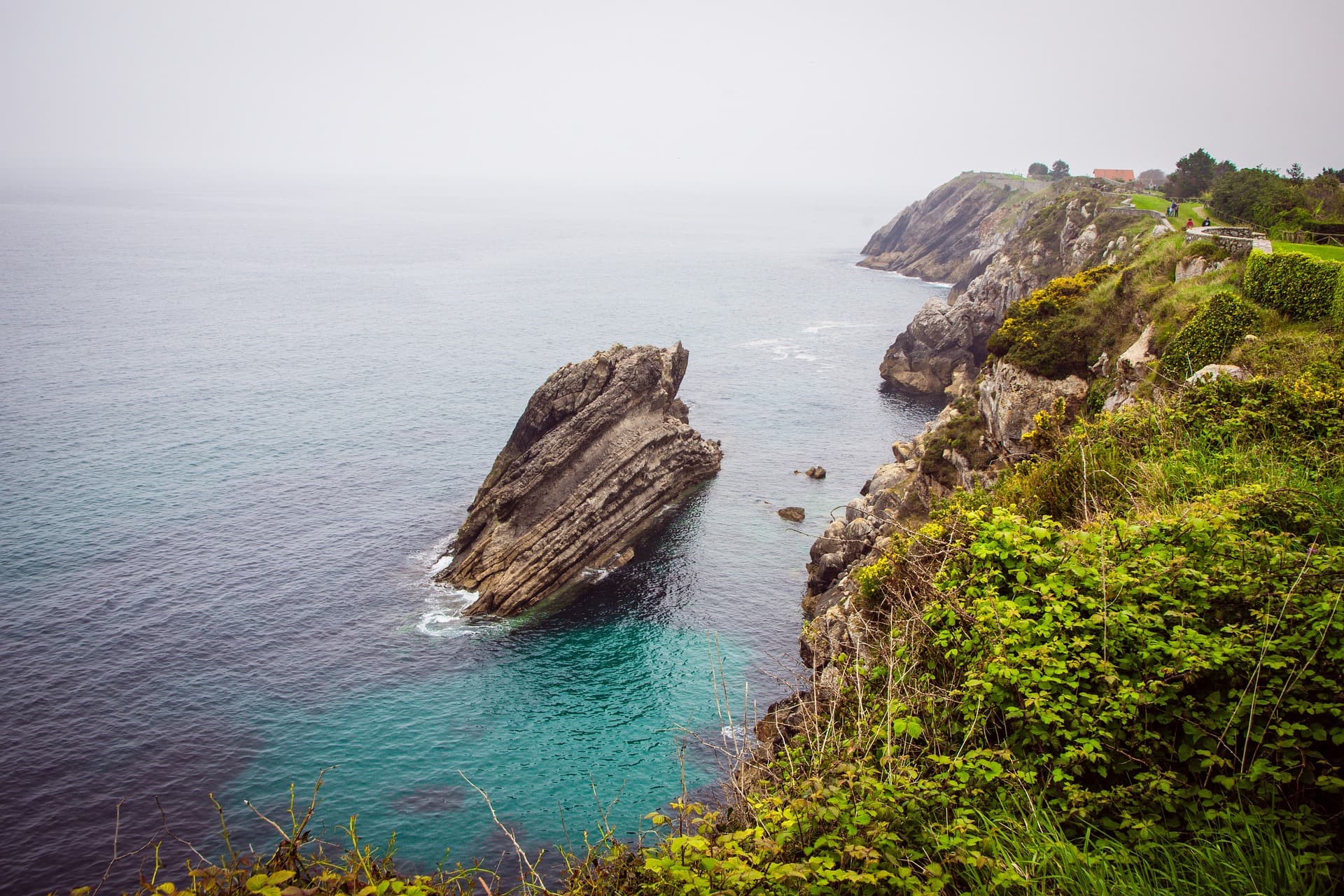
The north and the spring need a rain layer even when the forecast looks proud. Santiago can be wet while Seville is already in shirtsleeves. The Picos can be cold at a mirador in July while the coast at Llanes is merely gray. A light rain jacket lives in the daypack on a northern day and on any spring city day. It does not need to be a mountaineering shell. It needs to keep a wind off you for forty minutes. If your itinerary is only Madrid and Andalusia in July, the rain jacket can be the thin packable one, and the sun hat is the thing you will actually touch. If the itinerary is the Grand Tour, you will be grateful for the jacket in Galicia and you will stuff it under the seat on the way to Seville. That is the correct use of a jacket.
Seville at noon, Granada after dark
Andalusia is not one temperature. You can eat lunch in Seville in April in a shirtsleeve and want a jacket at the San Nicolás viewpoint in Granada the same night, because the city sits higher and the breeze comes off the Sierra Nevada. The Alhambra in the morning can be bright while the palace rooms themselves stay cool. Pack the layer in the daypack on transfer days instead of burying it in the suitcase that is already in the van. The same trick works in reverse in summer: the hat comes out for the Generalife, and a light shirt goes back on before you step into the cathedral or a fiercely air-conditioned restaurant. People get this wrong by packing for the postcard of the south and then shivering through a Madrid theater or a Rioja bodega cellar, both of which are serious about being cold.
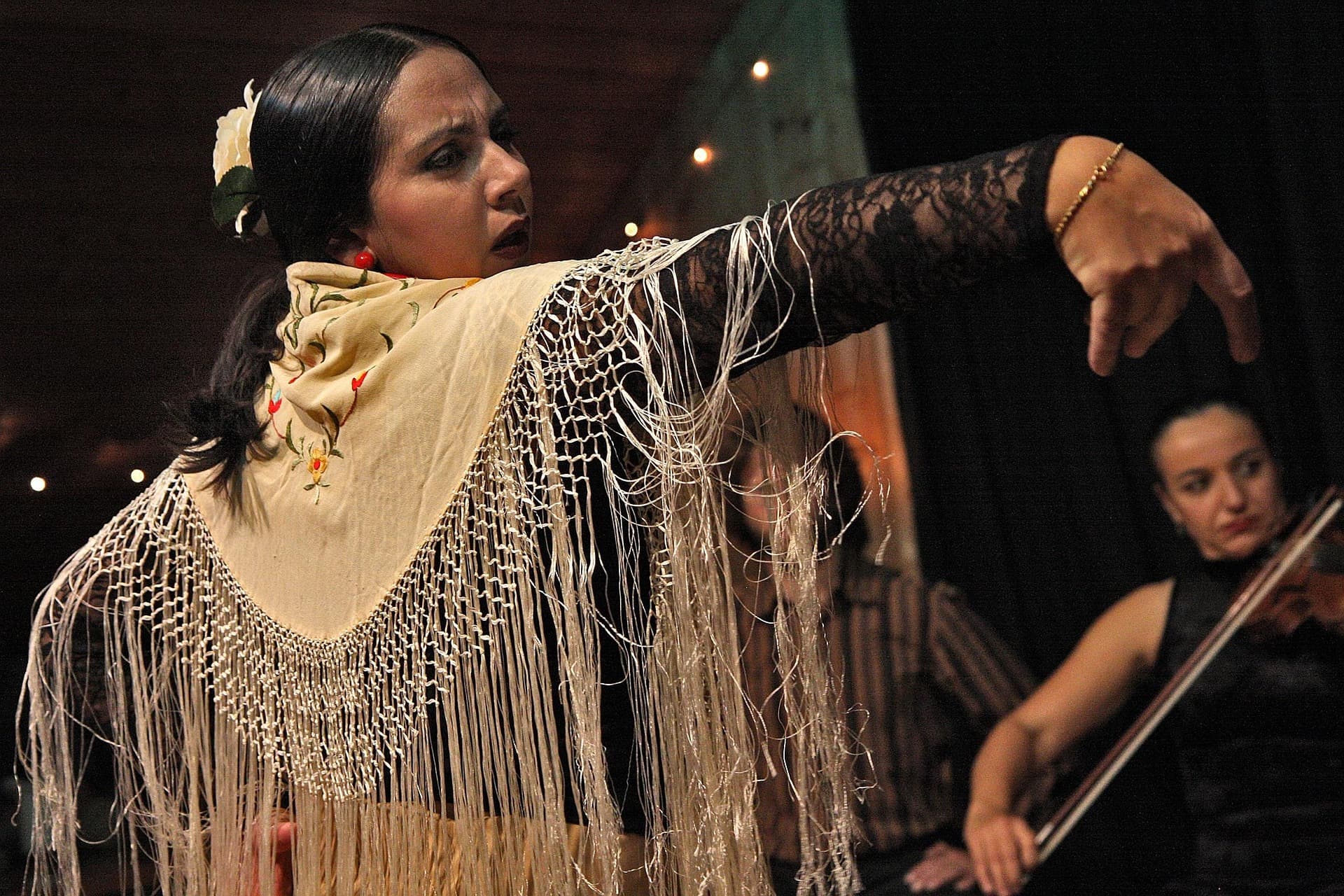
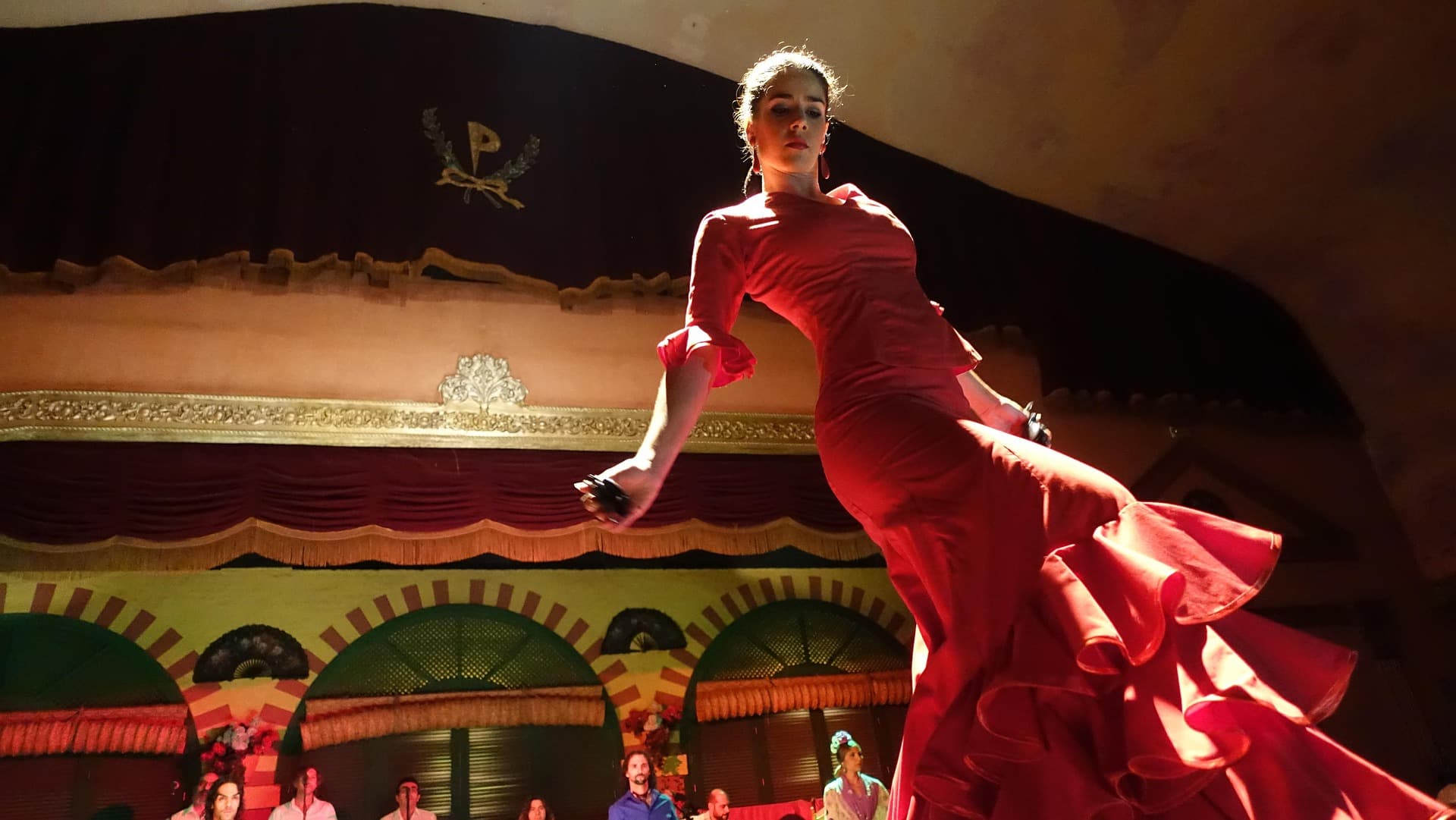
Clothes for a show are simpler than the shop windows suggest. At a flamenco performance you sit in your smarter outfit. You do not need a bata de cola. During Feria de Abril the women in flamenco dresses and the men in traje corto are going to private casetas they belong to. A visitor in ordinary good clothes is correctly dressed for the fairground, the lights, and the carriages. Renting a costume you cannot walk in is optional theater, not a local requirement. On the Grand Tour you will also hit wind on the meseta, in Segovia or Ávila, that Madrid’s courtyard did not warn you about. A scarf that covered your shoulders in the Mezquita will cover your neck on that wall walk. One piece, several jobs. That is the whole packing philosophy.
One bag, the AVE, and Toledo’s hill
You can take a suitcase on the AVE. Renfe’s racks are built for real luggage, and you keep the bag with you. There is no checked-bag counter. The day you feel it is not the two and a half hours to Santa Justa. It is afterward: security at Atocha if you are changing trains, the taxi queue at Santa Justa, the stairs in a Seville hotel the website called ‘historic,’ and above all Toledo. The station is below the hill. The old town is stone. Escalators help from one side and do not turn a 23-kilo roller into a good idea inside a pension without a lift. A driver on a private tour lifts the bag between hotels, which is the honest argument for a suitcase on those days. On a train-heavy week, a bag you can lift yourself onto a rack is the kinder choice.
For a 14-day trip, pack as if it were a week and do laundry once, around day 7, in Madrid or Seville. For a 21-day trip such as the Grand Tour, plan two laundry stops. Hotel service works. So does a lavandería, which is an ordinary neighborhood shop and not a crisis. Socks, underwear, and a base layer are what run out. Outfits do not, unless you are treating every dinner as a different costume. A half-empty suitcase you can move beats two stuffed ones you cannot. If you are checking a bag on the transatlantic flight, still keep a change of clothes and all medication in the carry-on. A delayed bag in Madrid is an inconvenience. A delayed bag that held your blood-pressure pills is a different kind of morning.
Medications, the plug, and a data plan without a sales pitch
Bring enough of every prescription for the whole trip plus a few extra days, in the original packaging, in the cabin bag. A copy of the prescription matters more for a medication that looks unusual at security than for an ordinary daily pill, but the bottle with your name on it is the simple version. Spanish pharmacies, the green cross, are excellent for a blister, a stomach, or a sunburn, and the pharmacist will tell you if you need a doctor. They are not a plan for the one medicine you cannot skip. Keep a paper list of drug names in your wallet in case a phone dies. If a controlled medication has rules on both sides of the ocean, sort that out before you fly. We are not the pharmacy and we are not going to invent a workaround at the hotel desk.
Spain is 230 volts, Type C or Type F. Read the small print on the charger brick. If it says a range that includes 100 to 240 volts, you need a compact adapter and you do not need a converter. Converters are for devices that are 110 volts only. Many hair dryers and flat irons are in that second group. Hotels have hair dryers. Leave the iron unless you have checked the plate and you know it can take 230. One adapter per person who must charge a phone at the same time is happier than one adapter and a debate. If your phone is unlocked, you can add a local data plan before you land so maps work at Barajas without begging the airport Wi-Fi. We do not sell a brand. Closer to travel we send a current note on eSIMs and roaming if you want it. Download offline maps of Toledo, Granada’s Alhambra hill, and any driving day anyway. A gorge does not owe you a signal.
Liquids, the Alhambra daypack, and the children’s extras
The international flight into Spain still follows the liquids rule you already know from airport security: small containers in a clear bag, in the carry-on. Medication in reasonable quantities stays with you. Once you are inside Spain, an AVE is not an airplane liquids check. A later flight to Málaga, Bilbao, or Palma is. Buy the large sunscreen at a pharmacy in Seville after you land rather than packing a liter from home and then surrendering it. A sun hat does more work than a second bottle anyway, from June through September in the south. If your only beach is a free afternoon in Valencia or on the Costa del Sol at the end of the trip, a swimsuit goes in a corner of the bag that week. It does not need to ride along for seven museum days in Madrid ‘just in case.’
The Alhambra wants a daypack and nothing else. Leave the roller at the Granada hotel. Take a taxi or the hill minibus up. Inside the bag: the ticket on your phone and a screenshot, because the signal on the hill is fickle and the Nasrid Palaces are a timed entry, not a window you can argue. Water. The sun hat in summer. The scarf or layer. The shoes you already trust. A small battery if your phone is also your camera and your ticket. You will walk the palaces and the Generalife. That is a real distance with slopes and cobbles, not a lobby and a gift shop. People who bring the big bag spend the ticket window looking for a locker strategy. People who bring the daypack spend it in the Court of the Myrtles. We reserve the timed ticket so the second group is you.
For children, pack one comfort item, a cap, a light layer, and their medication in your carry-on rather than in a bag they might leave on the train. A snack for the Madrid–Seville AVE is sensible if lunch is on the far side of Santa Justa. Offline episodes on a tablet are a reasonable parenting tool for that two and a half hours. A trunk of toys is how the suitcase hits the weight limit. A compact stroller earns its place in Retiro, Seville’s Parque de María Luisa, Valencia’s Turia gardens, and along Barcelona’s beach. It fights you in Toledo, the Albaicín, and Santiago. If those hills are on the week, a carrier is kinder for a small child. A car seat is not a packing afterthought. If you are driving, reserve the right group with the rental. Trains avoid the problem. Tell us the ages when we build the trip and we will not hand you a cobbled week plus a stroller and call it a plan.
- Shoes broken in, with tread, that you can wear to dinner.
- A scarf or shirt for shoulders and knees at the Mezquita and the cathedrals.
- Sun hat for June through September in the south. Rain layer for the north and for spring.
- Prescriptions in the carry-on, plus a few extra days.
- A Type C/F adapter, not a converter, for phone and camera chargers.
- A daypack for the Alhambra: water, ticket screenshot, hat, layer. The big bag stays at the hotel.
"On a 21-day loop, laundry in Seville or Madrid is the packing strategy. A second suitcase is not."— Spain 360 packing note
Lay the itinerary next to the bag before you zip it. If the days are Madrid, Toledo, Seville, and Granada, you are packing shoes, a church layer, a sun hat in season, and a daypack for the Alhambra. If the days include Llanes, the Picos, or Santiago, the rain jacket moves from optional to essential and the swimsuit stays home unless a beach is actually written down. One nicer outfit. Medications where security can see them. An adapter. Then stop. The cobbles will not care what else you meant to bring.
Plan Your Spain Trip
Talk with our Spain-based team about small-group departures, private itineraries, and straightforward travel from the US—we handle the details.
Contact UsRecommended Journey
The Grand Tour of Spain
Twenty-one small-group days from Madrid through the north, Barcelona, Valencia, and Andalusia. Long enough that a laundry stop matters more than a second pair of shoes.
View the itineraryExpert's Tip
Break the shoes in at home. A new pair bought for Toledo’s cobbles becomes a blister before the Alcázar, and there is no heroic version of that story.
Get the Soul of Spain in Your Inbox
Join our curated list for exclusive travel stories, hidden jazz venues, and expert guides delivered once a month.