Spanish Festivals and the Itinerary They Rewrite
12 min read
A festival in Spain is not a parade you add to an ordinary Tuesday. It closes streets, it triples demand for the hotels you actually want, it books out the restaurants near the route, and it makes a timed ticket the next morning a bad idea. Semana Santa moves with Easter. Seville’s Feria de Abril sits about two weeks after that. Valencia’s Fallas climax on 19 March. Pamplona’s San Fermín runs 6 to 14 July. La Tomatina, in Buñol, is the last Wednesday of August. The Three Kings parades are on the evening of 5 January. Spain 360 will plan toward one of these if it is the reason you are coming. We will plan around it if what you wanted was the Mezquita, the Alhambra, and a table you can still get. We will not pretend a midnight procession and a 9 a.m. Nasrid Palace entry are a clever pairing.
Semana Santa in Seville and in Málaga
Seville in Holy Week is one of the great religious spectacles in Europe, and it takes the historic center as its stage. The pasos move on the shoulders of costaleros hidden underneath. A saeta sung from a balcony can stop a street. The madrugada between Thursday and Good Friday is an all-night affair for the people who came for it, not a late dinner that happens to overlap a float. The cathedral quarter, Santa Cruz, and the official route are not a place we can promise you a quick taxi to a restaurant. Hotels on those streets are reserved many months ahead, sometimes from the previous year for the best locations. If Semana Santa is why you chose Seville, we build the week around the processions you can actually stand through, with meals and sleep arranged for a city that is awake at midnight. We do not schedule a full monument morning on top of the madrugada and call you resilient.
Málaga’s Holy Week is a different physical fact, and it is worth knowing before you assume the two cities are interchangeable that week. The thrones are carried on the shoulders of long teams you can see, not concealed under a paso the way Seville’s costaleros are. The crowds are enormous, the beach city is suddenly a procession city, and the old center clogs in its own pattern. It can be a magnificent thing to witness. It is a poor week to invent a side trip to Ronda ‘since we’re nearby,’ because getting out of the center and back for an evening procession is the whole logistical problem. The mistake we refuse most often is the combination: a late procession in Seville, then Granada’s Alhambra the next morning. Seville to Granada is about two and a half to three hours before you add the hill. A ticket for the Nasrid Palaces does not care that you went to bed at three. We split those days. The procession gets its night. The Alhambra gets a morning when you can tell the Court of the Lions from your own fatigue.
Feria de Abril: what a visitor can actually do
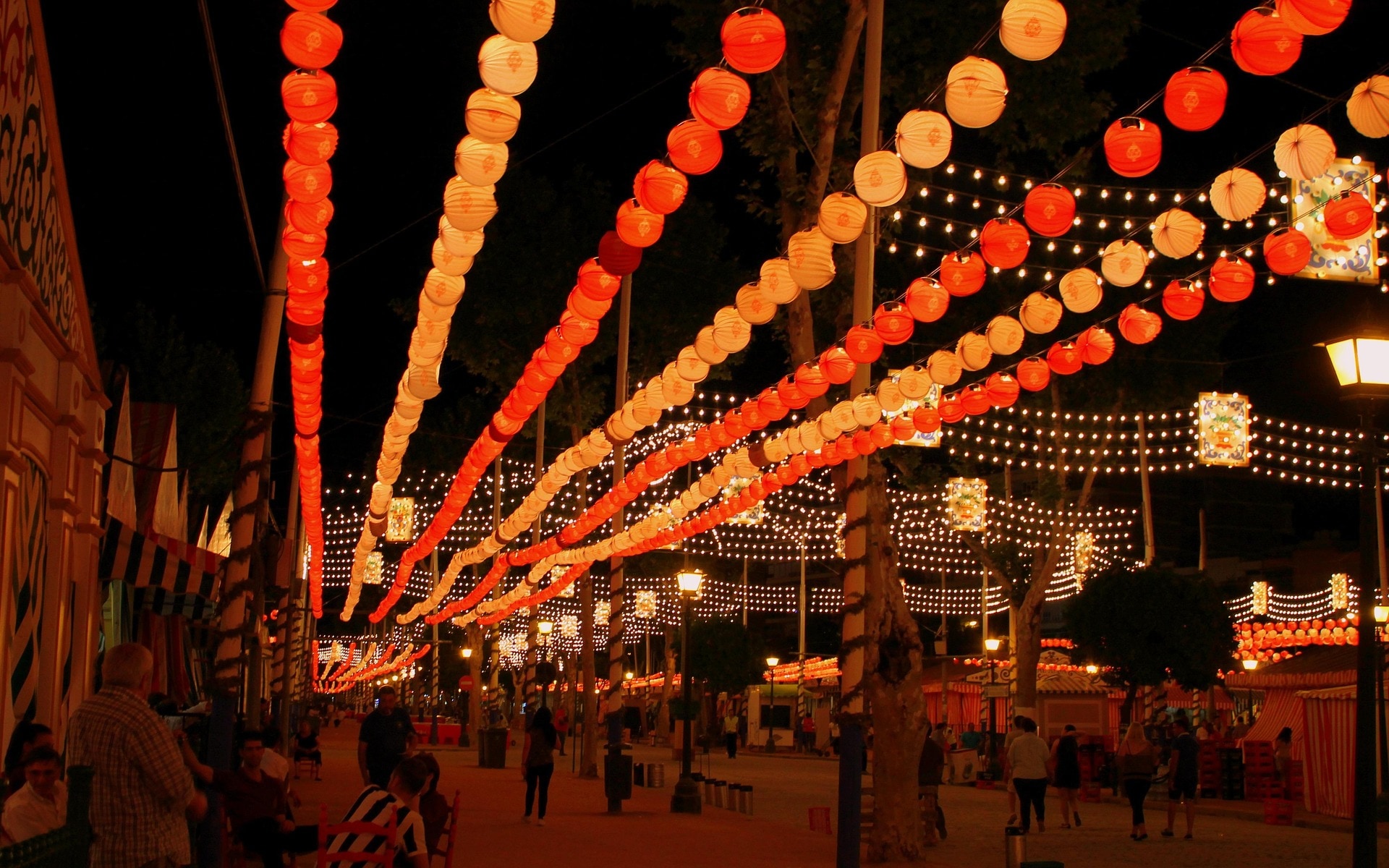
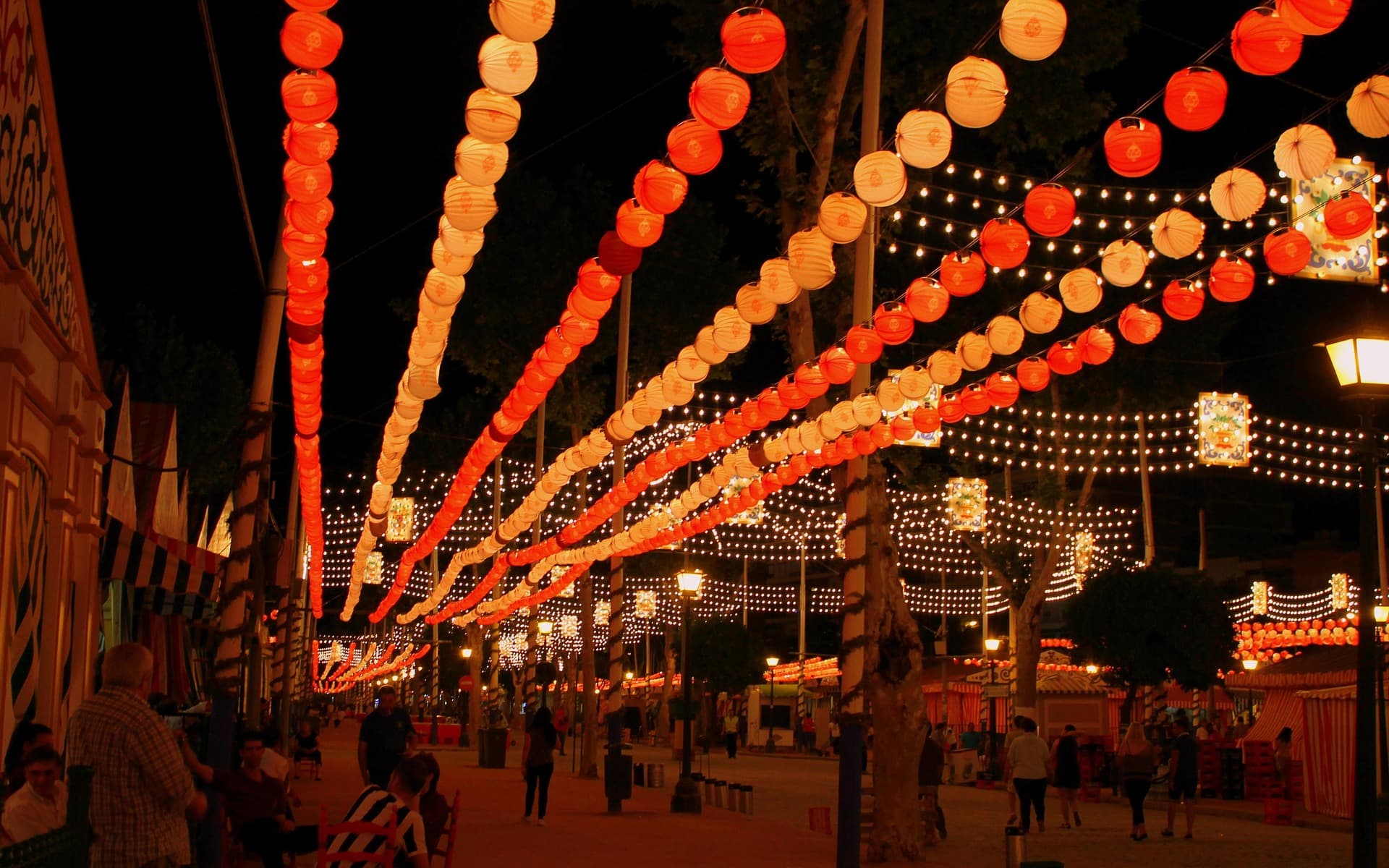
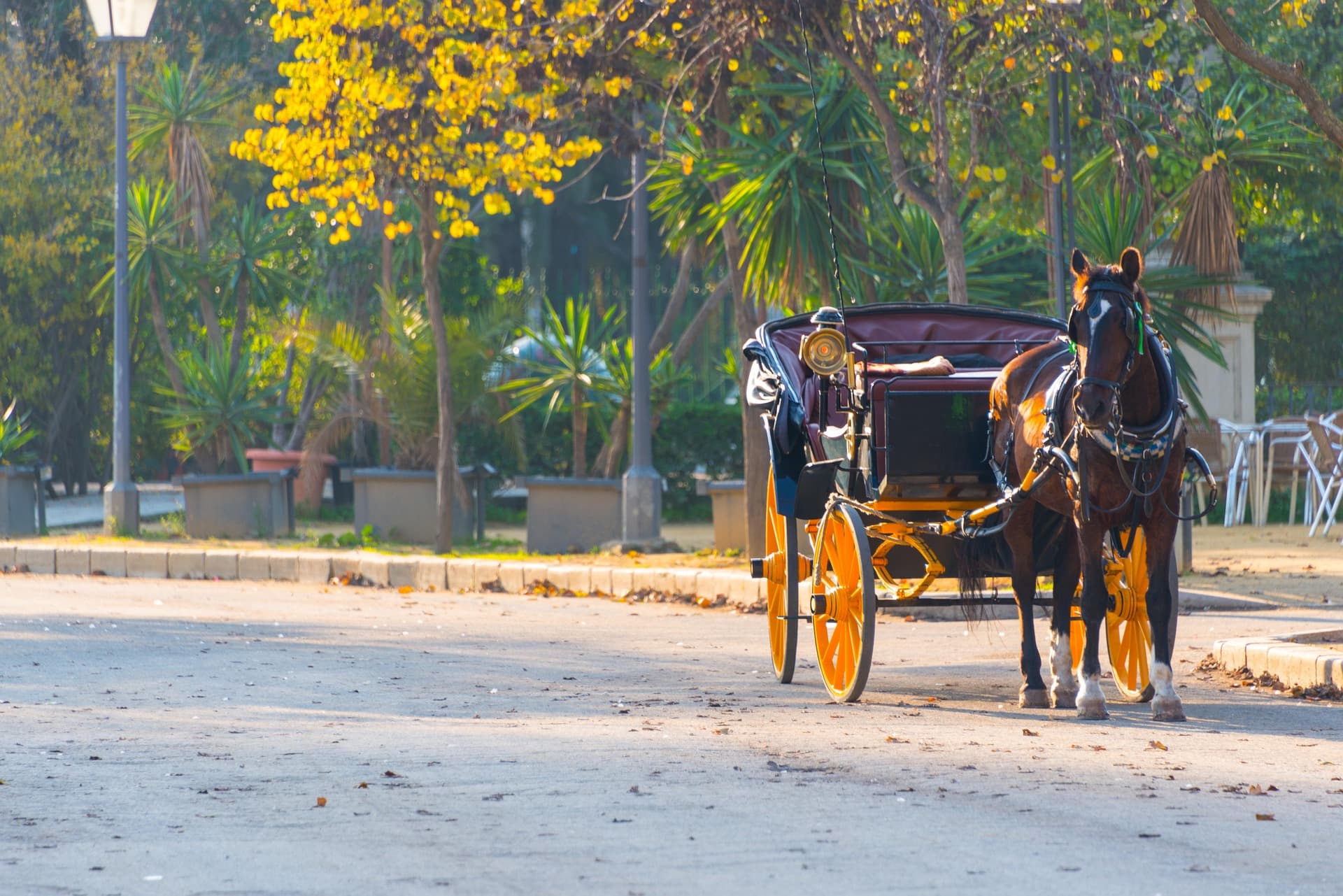
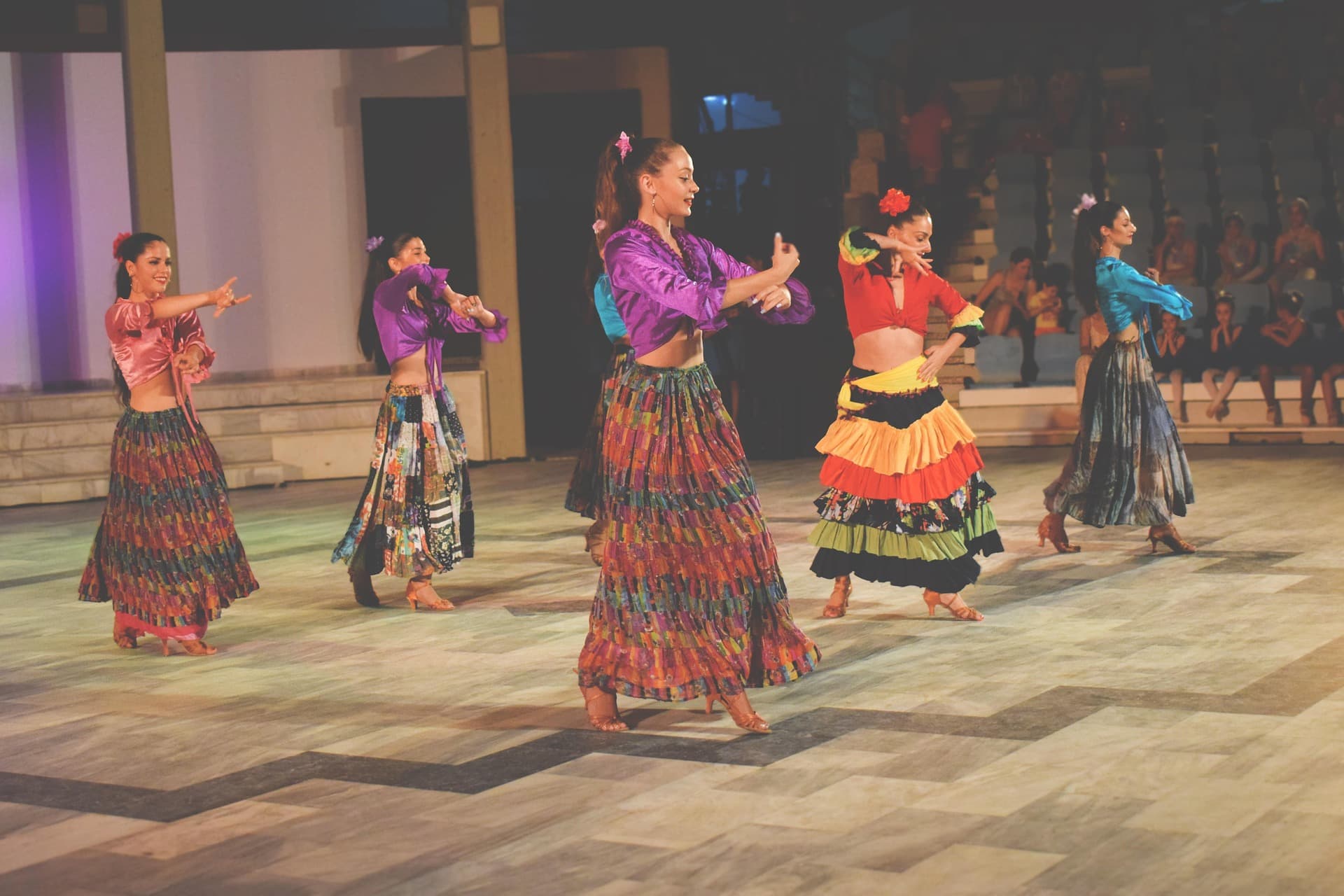
Feria de Abril starts about two weeks after Easter. The date moves. It is not a fixed week you can memorize as ‘mid-April’ without looking at the year. The fairground is in Los Remedios, on the edge of the center, and at night it is genuinely spectacular: rows of lights, horses and carriages on the way in, music leaking from a thousand doors. That public picture is what you can have without knowing anyone. The casetas themselves, the striped tents, are mostly private. They belong to families, companies, and associations. A stranger in a flamenco dress is not owed an invitation, and most doors will not open because the dress was convincing. Women in traje de flamenca and men in traje corto are locals who have a tent to go to. For you, the dress is optional. Ordinary good clothes are the correct visitor uniform. Walk the real, look at the carriages, ride if that is your pleasure, eat on the public side of the grounds, and treat the calle del Infierno, the rides, as the fairground it is.
What Feria does to the rest of Seville is the part that rewrites a Classic Andalusia week. Hotels fill, and the rates are not the rates of the week after the tents come down. Taxis to Santa Justa take longer. A driver who needs to leave the city for a white village in the morning is leaving a city that went to bed late. Restaurants that we can book in a normal May are booked for members and their guests. If you want the lights, we lean into them: fewer early monuments, a late evening at the real, and the Alcázar on a day when you are awake. If you want the gardens quiet, we pick a week that is actually after the crush, not the short gap between Easter and the fair when Seville is already living in the next event. The fair is a wonderful reason to come. It is a bad accident to discover on a trip you built around the cathedral.
Fallas, and a city that means to be loud
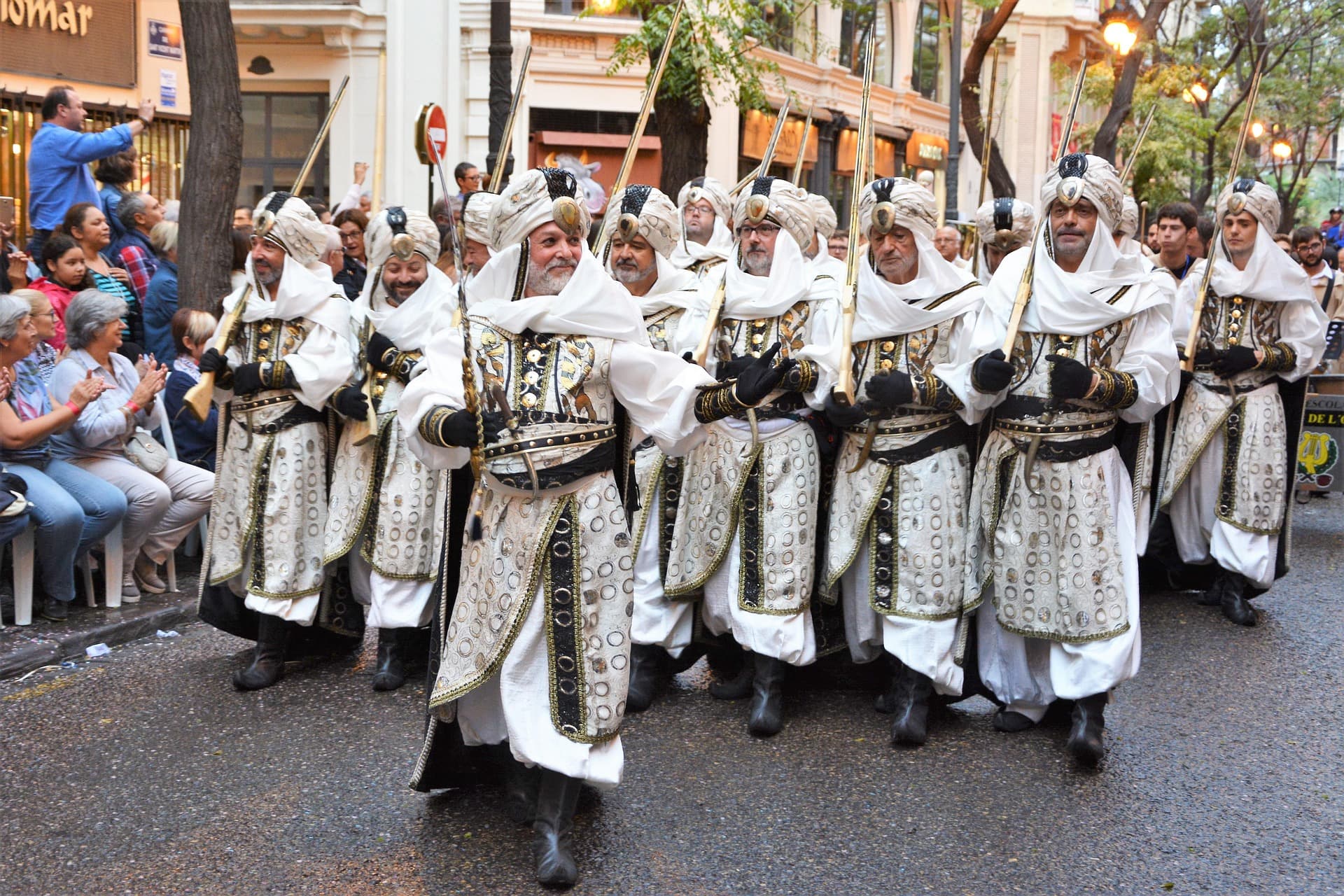
Valencia’s Fallas build for days and climax on 19 March, San José. Neighborhood committees spend the year on the ninots, the huge satirical sculptures, and then burn most of them on the night of the cremà. In the afternoons the mascletà in the Plaza del Ayuntamiento is a planned explosion of noise you feel in your ribs. It is not a quaint crafts fair that happens to include firecrackers. The city is full of falleros in regional dress, the streets around each falla are the event, and a quiet morning at the City of Arts and Sciences is not why anyone booked this week. If you want the burn and the noise, we plan toward it: a hotel you can walk back to after the cremà, ears prepared, and no 8 a.m. coach to somewhere else the next day. If you want the Turia gardens, the Oceanogràfic, and a long lunch, we plan around Fallas. The sculptures are impressive in the days before the 19th. The night of the 19th is the point, and it is incompatible with a delicate schedule.
San Fermín, and the run we will not build a family trip around
San Fermín in Pamplona runs from 6 to 14 July. The chupinazo opens it at noon on the 6th. Each morning the encierro sends the bulls through the streets shortly after 8. People are gored. People fall and are trampled. The course is not a cultural checkbox and it is not a colorful backdrop for a photograph you take from the cobbles with a child on your shoulders. Spain 360 does not build family trips around running with the bulls. We will not put a teenager on the course because they saw a film. We will not schedule a family to ‘watch from the fence’ as if the fence were a parade route with cotton candy. An adult who already understands the risk and has their own booked balcony is having a different trip from the one we sell. Even then, the city that week is a crowded, late, early-morning place. It is a specialist visit. It is not a stop we bolt onto a northern Spain driving week so that nobody misses a famous name.
If what you wanted from Navarre was the old town, the pintxos, and a walk on the walls, we come in a different week, when the cafes belong to the people who live there and the hotel is a hotel rather than a prize. July outside those nine days is still summer in Pamplona. The festival is the festival. Mixing the two and hoping to keep a calm family pace is how you get a frightened child and a parent who is angry at the itinerary. We would rather disappoint you on the planning call than on the morning of the 7th. There are bullfights attached to the feria as well. We do not treat them as a default activity for a group that came to see the Picos or the Guggenheim. If you want them, say so as an adult plan. We will not surprise a family with them.
La Tomatina is a mess on purpose. Three Kings is a parade.
La Tomatina happens in Buñol, a town inland from Valencia, on the last Wednesday of August. It is ticketed. The town limits the crowd because an unlimited tomato fight in a small place stopped being charming and became a safety problem. You will wear clothes you can throw away. Goggles are a serious suggestion. The pulp gets in everything, including the shoes you thought you could rinse. It is a novelty. It is not a culture day, and we do not fold it into a Valencia morning at the Lonja or the City of Arts as if it were a folkloric interlude before lunch. If you want it, it is the day: the ticket, the mess, a place to shower, and no monument afterward. Do not plan to be presentable for a serious dinner in Valencia that night. Buñol is close to the city on a map and far away once you are covered in tomato.
The Cabalgata de Reyes, the Three Kings parade, is the evening of 5 January in Madrid, Barcelona, Seville, and plenty of smaller cities. Floats, children, sweets, and a late night that is actually designed for families. The next day, 6 January, is a holiday. Some museums and shops close or keep short hours. A roscón de Reyes on the table is the edible part. This is a lovely reason to be in a city you were already planning to be in. It is rarely worth crossing the country for, unless the children are at the age where the parade is the point of the winter trip. In that case we keep 5 January free in the evening, we do not book a timed Sagrada or a late train that makes you miss the start, and we leave 6 January slow. A parade plus a full museum day plus a departure flight is how the holiday becomes a queue.
Dates move when Easter moves. Confirm the year before you hold the flights.
| Festival | Rough timing | Plan toward it, or around it |
|---|---|---|
| Semana Santa, Seville and Málaga | Moves with Easter. The late processions run past midnight | Toward it if the processions are the reason. Otherwise another week. Do not pair a madrugada with the next morning’s Alhambra. |
| Feria de Abril, Seville | About two weeks after Easter, at the Los Remedios fairground | Toward it for the lights, horses, and public fairground. Casetas are private. Dress is optional. Book early. |
| Fallas, Valencia | Builds through March. Climax and cremà on 19 March | Toward it if you want the noise and the fire. Around it if you wanted the Turia gardens in peace. |
| San Fermín, Pamplona | 6–14 July. The encierro is early each morning | We do not build family trips around running with the bulls. Come another week for the city itself. |
| La Tomatina, Buñol | Last Wednesday of August. Ticketed | A messy novelty, not a culture stop on a Valencia art day. |
| Cabalgata de Reyes | Evening of 5 January. 6 January is a holiday | Toward it if you are already in the city with children. Keep the next morning slow. |
The small-town feria you did not schedule
Almost every town has a feria or a saint’s day: a temporary bullring on the edge of a white village, a dance floor in the plaza, the one good restaurant closed for a peña dinner, a band where you expected a quiet Monday. It can be the best evening of the trip. It can also erase the table we had in mind in Arcos, Ronda, or a Rioja village. We do not promise you a local feria. We cannot honestly sell ‘you will stumble on a festival’ as if it were a service. When we already know that your dates land on a town’s feria, we say so while the plan can still move a night to the next valley or lean in and stay for the lights. If we discover it late, we change dinner and we keep the mood. A closed plaza is not a failed day. It is Spain doing what it does for itself, not for the calendar we printed.
The lead times are the unromantic half of festival travel. Semana Santa and Feria hotels in Seville’s center: many months, and for the streets you can picture, often longer. Alhambra Nasrid tickets during Easter week and the surrounding peaks go when the release opens, not the fortnight before you fly. Valencia for the cremà, and Pamplona for those July nights, are the same story. A normal week in May or October still needs the Alhambra and the Sagrada reserved once the route is agreed, but you are competing with other visitors, not with an entire city that already lives there. Tell us the festival is the point when you first write. Discovering it after we have held a quiet hotel plan means starting over, and the rooms we wanted may already be gone.
The week after, chosen on purpose
When someone tells us they want quiet beauty, we do not pick the famous week and hope the side streets will be empty. We pick a week that is actually after the crush. In Seville that means looking past both Easter and the fair, not parking in the gap between them and calling it peaceful. Late spring once Feria has ended, or October, when the light is kind and the orange trees are not competing with a procession, is when the Alcázar and the cathedral can be themselves. Granada in the same spirit gets the Alhambra on a morning that is not the morning after a midnight drive from Seville. Classic Andalusia, seven private days through Seville, the white villages, Ronda, Granada, and Córdoba, is built for that kind of attention. It can also be built through a festival, if the festival is the brief. It cannot be both a recovery week and a feria week.
- Semana Santa moves. Check Easter for your year before you say ‘mid-April’ and mean two different events.
- Feria casetas are private. The lights, the horses, and the public fairground are what a visitor can count on.
- Do not put a family on the encierro. We will not build the trip that way.
- La Tomatina is ticketed, messy, and the whole day. It is not a stop before the Lonja.
- Three Kings is the evening of 5 January. Leave 6 January slow if you stayed out for the parade.
- A town feria is a gift when it happens. It is not a promise on the PDF.
"A midnight procession and a morning Alhambra are two trips sharing one exhausted person. We will not book them as one day."— Spain 360 on festival weeks
Write to us with the week you think you want and the reason. If the reason is the costaleros, the cremà, the fairground at night, or a child who still believes in the Kings, we will build toward that and protect the sleep around it. If the reason is the Nasrid Palaces, the Mezquita, and a white village in good light, we will put you in a week when the streets are open and the hotels are merely busy. Both are good trips. They are not the same trip, and the driving day between Seville and Granada will not forgive us for pretending.
Plan Your Spain Trip
Talk with our Spain-based team about small-group departures, private itineraries, and straightforward travel from the US—we handle the details.
Contact UsRecommended Journey
Classic Andalusia
Seven private days through Seville, the white villages, Ronda, Granada, and Córdoba. Tell us if a festival week is the reason, or if you want the streets open and the Alhambra on a rested morning.
View the itineraryExpert's Tip
If you want the Alcázar quiet, do not book the gap between Semana Santa and Feria de Abril and call it the calm week. Seville is already filling the hotels for the fair.
Get the Soul of Spain in Your Inbox
Join our curated list for exclusive travel stories, hidden jazz venues, and expert guides delivered once a month.