Three Days in Madrid
12 min read
Three days in Madrid is enough if you stop trying to spend them all on the same four squares. You want one serious morning on the Paseo del Arte, one long lunch in a neighborhood where people live, and one evening that is not a queue for a postcard. The Prado, the Reina Sofía, and the Thyssen sit in a line and call themselves the Paseo del Arte. Doing all three at full size is how a good city becomes a corridor of coat checks. Spain 360 guests on a first Madrid stay get the palace quarter, the park, and either Malasaña or Chamberí. They do not get Toledo on the same day as Las Meninas. What follows is the three-day shape we would still defend if we were handing you a metro card and meeting you for lunch on day two.
Day 1: the Prado first, and then stop
Book a timed entry on the Prado’s own site before you land. Come for opening, or as close to it as the slot allows. The entrance you want is the Jerónimos extension on the east side of the building, by the church of San Jerónimo el Real, not a hopeful walk up to whichever door faces the Paseo. Be a few minutes early. Security is real, and a ticket for 9:30 is not a ticket for 10:15. If your flight got in the night before and you are still on another continent’s clock, this is still the right morning. A Prado visit that starts at 4 p.m. after a long lunch is a different, worse museum.
Inside, go to Velázquez. Las Meninas is the painting, and it rewards standing farther back than the crowd wants you to stand, so you can see that the picture includes the room you are almost in. Then go to Goya. The black paintings are in the Prado; follow the Goya rooms rather than a room number from an old guidebook, because the hang moves. Give yourself until about 12:30 or 1 and leave. Three hours is a full first visit. You will not have “done” the Prado. Nobody does. The Italian galleries, the Bosch, the garden-level sculpture: choose one more thing if you are fresh, and then walk out while you still like paint. The person who stays until the guards are tired remembers their feet.
Pick at most one more museum, and make it short. If missing Guernica would bother you for the rest of the trip, eat first and then do a focused hour at the Reina Sofía, on Calle de Santa Isabel, a short walk toward Atocha. See Guernica and the room around it and leave. If you would rather have something calmer, the Thyssen-Bornemisza is on the Paseo del Prado itself, across from the Neptune fountain at Plaza de Cánovas del Castillo. One floor is enough. A combined Paseo del Arte ticket sometimes exists. Read whether it actually reserves your Prado time. A discount that still leaves you in a walk-up shuffle at noon is the wrong product. The Prado also publishes free evening windows. They are real and they are crowded. Confirm the current hours on the museum site if you are tempted. On a three-day trip, the timed morning ticket is the kinder plan.
Lunch, then the Retiro, then Letras
Lunch is the long meal, from about 2 to 4. Do not eat a dry sandwich on the Prado steps and call it done, and do not sit down at 12:15 expecting the room you want to be alive. Walk into Barrio de las Letras, the grid south of Sol around Plaza de Santa Ana. Calle de las Huertas and Calle del León are the spines. The plaques in the pavement belong to Cervantes and Lope and their neighbors; they are a pleasant thing to notice and a poor reason to choose a restaurant. Eat on a side street, at a table, and stay long enough that the afternoon is shorter than you planned. That is the point of Madrid.
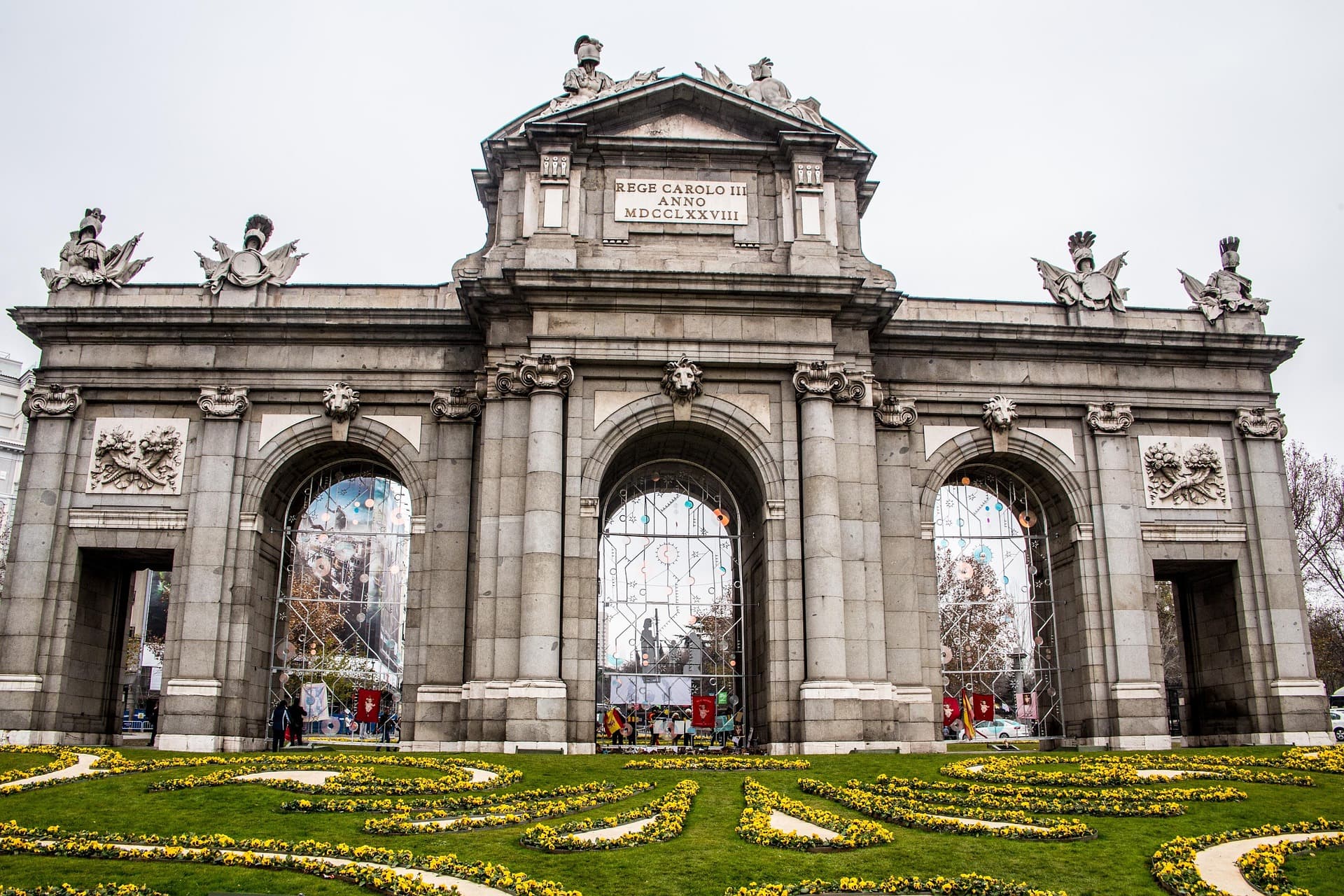
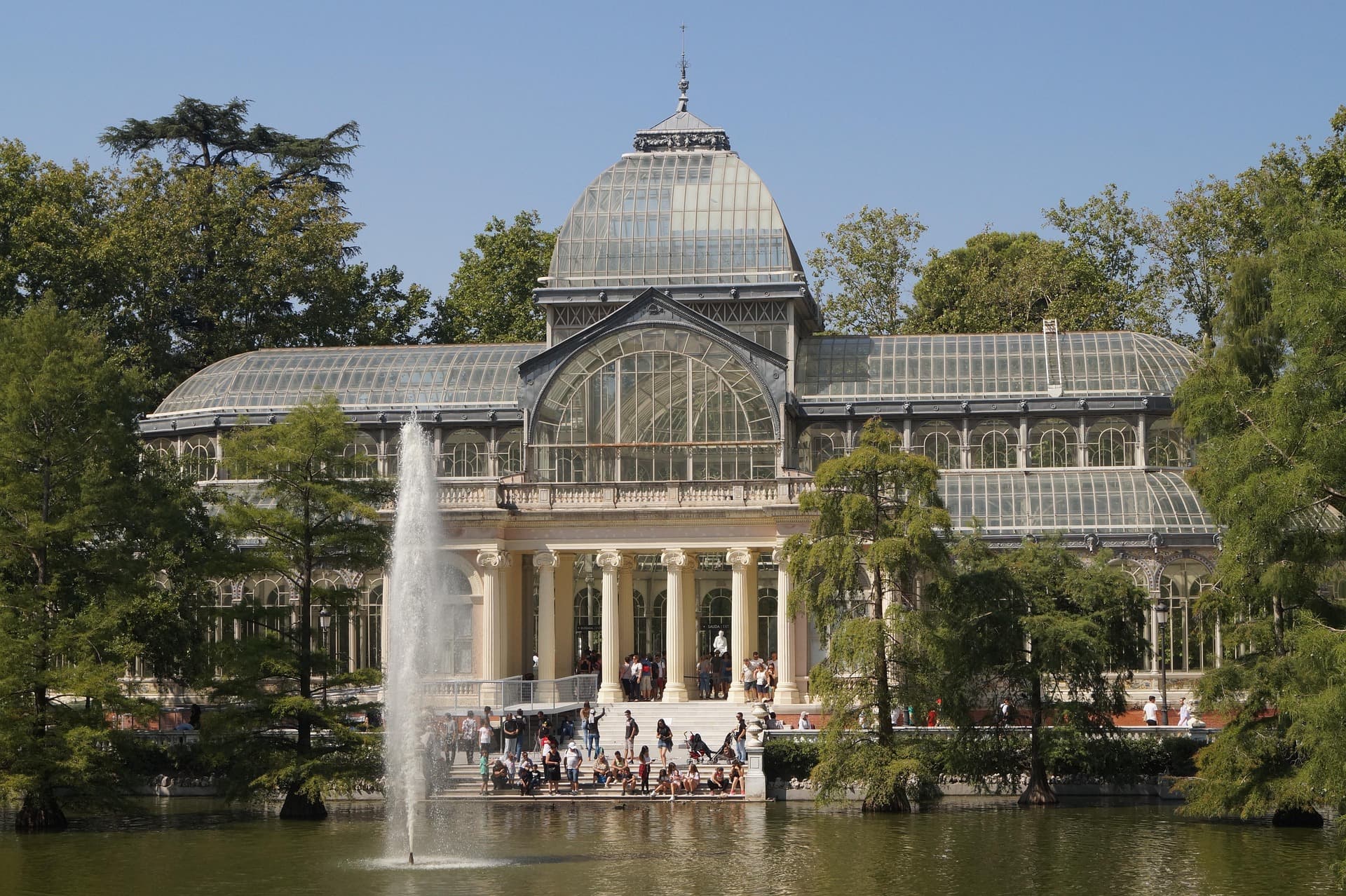
After lunch, the Retiro. Enter from Plaza de la Independencia, through the gate beside the Puerta de Alcalá, and walk toward the Estanque, the big rectangular lake where people row badly and sit well. If your legs agree, continue to the Palacio de Cristal, the glasshouse over its own pond. The park is large. You are not circumnavigating it, and you are not adding the Reina Sofía afterward if you already chose the Thyssen. Sit. The day has already contained the best museum in the city. An evening walk back through Letras, and dinner after 8:30 or 9, is the right ending. If this is somehow your arrival day because the flight landed at dawn, invert it: a short walk from Sol to Plaza de Santa Ana, an early night, and the Prado tomorrow. Do not museum-sprint on the day you crossed the Atlantic.
Day 2: the palace decision, then a real lunch
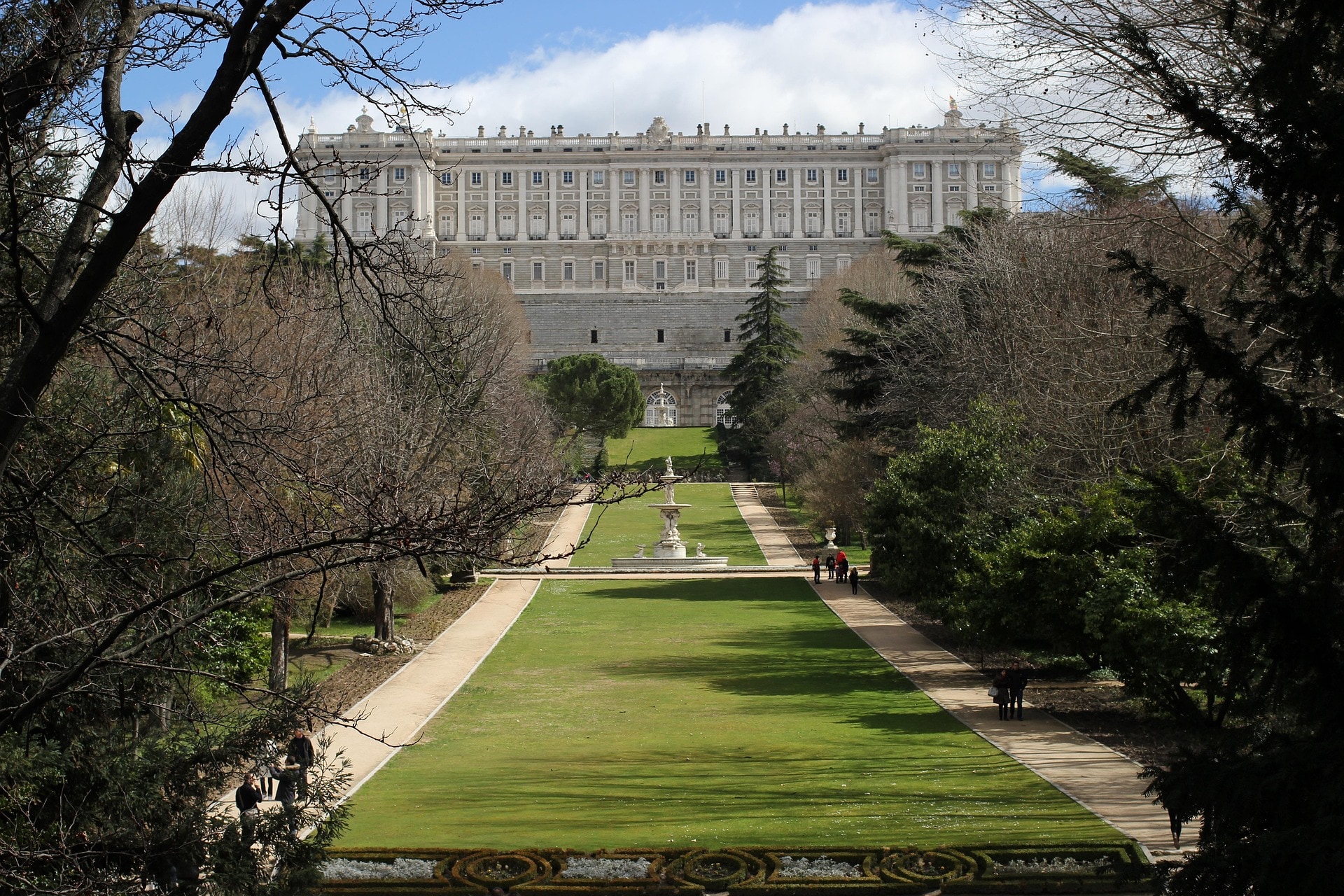
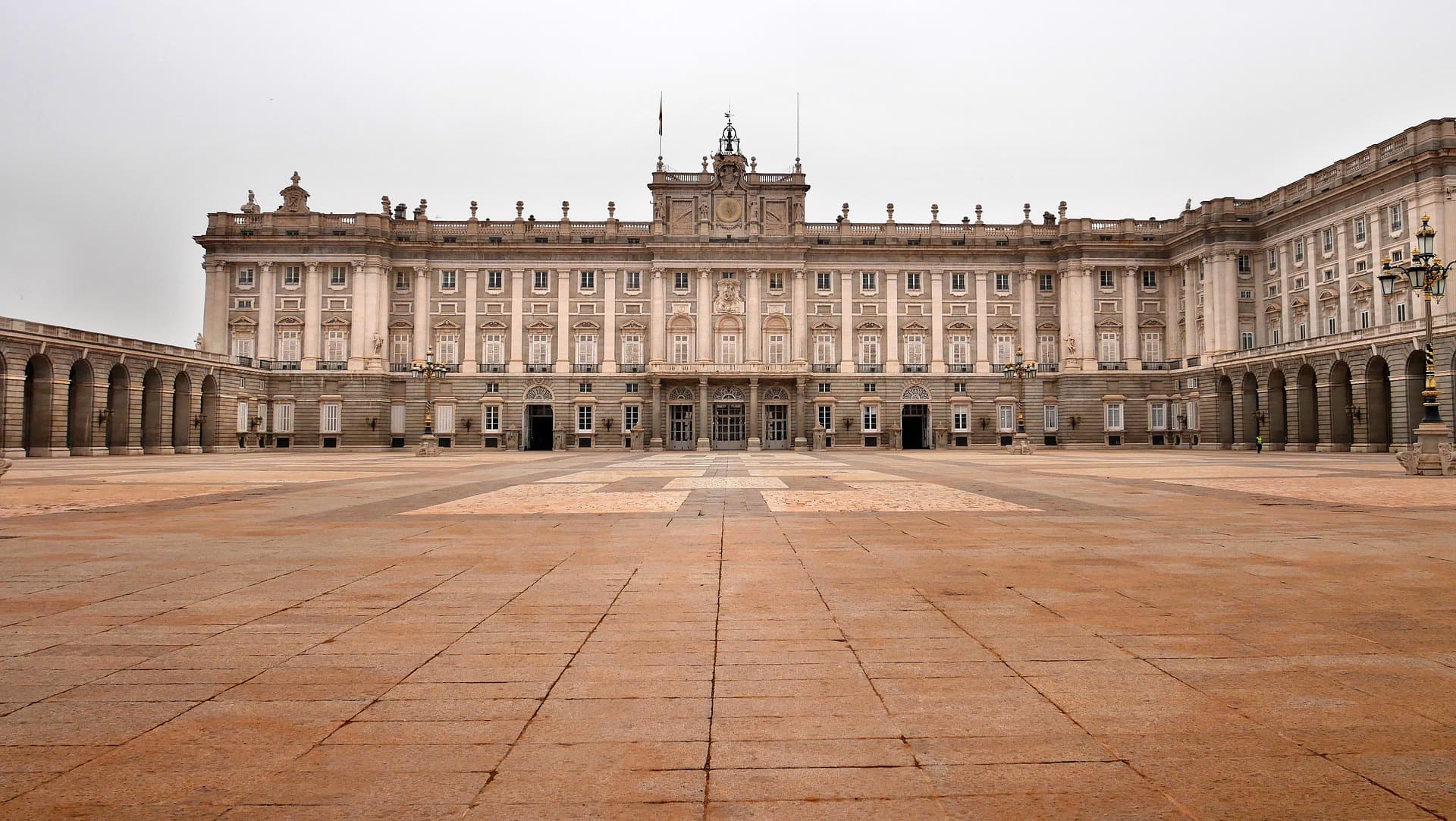
Start at Plaza de Oriente, in front of the Royal Palace, and know before you leave the hotel whether you are going inside. The interior, booked through Patrimonio Nacional, is a sequence of rooms that wants ninety minutes to two hours if you include a look at the armory. It is grand and it is tiring. The Almudena cathedral is immediately beside the palace. A short visit inside is reasonable. A full interior of the palace and a full interior of the cathedral and a plan to be somewhere else at noon is how lunch dies. If a changing-of-the-guard ceremony falls on your morning, check the Patrimonio calendar rather than a blog’s “every Wednesday” claim, watch from the plaza, and do not hold an interior slot that collides with it.
If you skip the inside, you have not failed the day. The façade from Plaza de Oriente, a turn through the cathedral, and the Sabatini gardens when they are open are the exterior version, and they give you the morning back. Walk Calle Mayor east into Plaza Mayor. The square is architecture and a meeting point. It is not where you sit down for the important meal. The snack, if you want the Madrid cliché done correctly, is a bocadillo de calamares: a roll of fried squid from a bar on the Botoneras side of the square, eaten standing. The counters there, La Campana among them, are famous and they are not subtle. Have the sandwich. Then keep walking.
Walk south into La Latina for lunch. Mercado de San Miguel, the iron-and-glass hall just off Plaza Mayor, is worth ten minutes if you like the building. It is a crowded food hall now, and it is the wrong place to make the meal. Continue to Cava Baja, Plaza de la Paja, and the streets around Mercado de la Cebada. This is where you sit. In winter, cocido madrileño is the lunch to order if a house is actually cooking it: a chickpea stew that often arrives as broth, then the vegetables and chickpeas, then the meats, and it occupies the middle of the day. La Bola, near the palace quarter, and Malacatín, down in La Latina, are the famous rooms. They are busy. Book. They are institutions, not a ranking, and they are a different event from a tapa crawl. In July, do not go looking for cocido at 9 p.m. It is a cold-weather lunch. Tortilla de patata is the all-year order: say if you want it juicy in the center or cooked through. Any serious bar can do this. You do not need a list.
The afternoon of day 2 should be lazy on purpose. Ópera, the exterior of the Teatro Real, a coffee, the hotel. Chocolate con churros at Chocolatería San Ginés, in the Pasadizo de San Ginés between Sol and Ópera, is the famous cup. The room is old, the queue is real, and the right hours are a late breakfast when you have nowhere to be, or after midnight when the rest of the city is deciding whether to go home. It is a bad 8:45 on a morning when the Prado door opens at 9:30 and you are still standing in the passage. Dinner, again, after 9. La Latina will still be going. So will Letras. Pick one and stay.
Day 3: a neighborhood, then Debod at dusk
Spend the third morning somewhere that is not printed on the souvenir tray. Malasaña is the usual choice: start with a coffee at Plaza del Dos de Mayo, then walk Calle del Espíritu Santo and Calle de Velarde, the smaller streets south of the square, the shops that are actually open. Gran Vía is the avenue you cross when the grid forces you to. It is not the neighborhood. If Malasaña feels too geared to the previous night, switch the morning to Chamberí. Calle de Ponzano is the vermouth-and-a-small-plate street; on a Saturday it is popular, so arrive before it becomes a procession. Mercado de Vallehermoso is the neighborhood market, useful if you want to see what people buy rather than what visitors photograph. The Museo Sorolla, on Paseo del General Martínez Campos, is the right size if you want one more interior: the painter’s house, a garden, about an hour. It is not a third Prado, and that is why it belongs on day 3.
Late afternoon, go to the Temple of Debod. It stands in the Parque del Oeste, west of Plaza de España, an Egyptian temple moved here when the Aswan waters rose. The interior has limited hours and is not the reason to come. The terrace, the water, and the sky are the reason. Be there about forty minutes before sunset. The exact minute of the sun dropping is when the crowd performs it. If you are early you can stand like a person who came for the view. Metro or a short taxi from Chamberí is the sane approach. Walking across the whole city from the Prado to be “on time” for the sun is how you arrive cross and late.
Toledo is the day-trip people try to glue onto this morning, and it does not fit. The train from Madrid takes about half an hour to a station outside the walls, and you still need a bus or a taxi up into the old town. The cathedral, the synagogue quarter, and a proper lunch are a full day, back in Madrid by evening. They are not a prelude to Las Meninas, and they are not a substitute for Malasaña. Do not drive a rental into Toledo’s old town. The streets will stop you, and you will spend the hour you wanted in the cathedral looking for a car park. If Toledo, Segovia, Salamanca, and Ávila are actually the point, that is a different week — Gems of Central Spain — with Madrid as the bed and the towns as the days. Link it that way. Do not annex it to day 3.
If one of the days is Sunday
El Rastro runs on Sunday morning and into early afternoon along Calle de la Ribera de Curtidores, spilling from Plaza de Cascorro. Go when it opens, not at 1 p.m., when you are shopping other people’s leftovers in a crowd that has already been picked over. Watch your bag. You will already be in La Latina, so this is your lunch neighborhood and you can skip the hunt. The Rastro replaces the Malasaña or Chamberí morning. It does not replace the Prado, and it does not cancel Debod if the evening is clear. Museums that are open on Sunday afternoon collect the people who heard about a free window. If that window is your only plan, you will queue. Keep the timed morning ticket on a Saturday or a Monday and let Sunday be the market.
Monday is the other edge. Some museums close, and the exact day can differ between the Prado, the Reina Sofía, and the Thyssen. Check the week you are actually in the city before you assign your only museum morning to a shuttered door. A three-day trip that lands on a Sunday-Monday-Tuesday needs the Prado on Tuesday morning if Monday is dark, the Rastro on Sunday, and the palace on the remaining day. Write it down that way before you book the timed ticket for a morning the building does not open.
"Three days in Madrid is one museum morning, one old-town lunch, and one neighborhood that is not on the postcard."— Spain 360 trip notes
Metro, the airport taxi, and the two stations
Move on the metro. Buy a multi-trip ticket from the machine and read the current name of the card on the screen at Sol; it gets rebranded more often than the lines do. Line 1 runs through Sol and down to Atocha. Line 2 puts you at Banco de España for the Prado end of the Paseo, and at Ópera for the palace. Estación del Arte is the stop for the Reina Sofía. You do not need a car in the city. A car is how you add a parking garage to a walkable day and then still take the metro.
On arrival night from Barajas, take a taxi from the official rank. There is a fixed fare into the center inside the M-30. Confirm the figure on the posted sign, and ignore anyone who offers a car inside the terminal. The metro from the airport is Line 8 and it carries a supplement; the Cercanías C1 from Terminal 4 to Atocha is the other public option. Both are reasonable in daylight with a small bag. At 10 p.m. with a suitcase, pay the taxi and start the trip in a good mood. The same logic runs in reverse on a dawn flight: a pre-booked transfer or a rank taxi beats a connection you have never made half-asleep.
When you leave Madrid by train, read the station name, not just the city. Puerta de Atocha is the classic departure for the AVE south and east: Seville in about two and a half hours, Córdoba in about an hour and forty-five, Valencia in about an hour and forty-five, and many of the Barcelona trains, also about two and a half hours. OUIGO and Iryo run some of those corridors too. Chamartín is the north station: Segovia, Valladolid, and the services toward the Basque Country. Since the tunnel under Madrid opened, some high-speed trains start at one station and call at the other. “Madrid” on a PDF is not a platform. The consequence of mixing them up is a cross-town taxi at departure minus twenty minutes, and a Seville train you were early for leaving without you. Look the night before. Set the alarm for the station that is actually printed on the ticket.
Dinner starts in earnest after 8:30 or 9. San Ginés is for late breakfast or after midnight, not for the hour before a Prado slot.
| Day | Morning | Middle of the day | Leave out |
|---|---|---|---|
| Day 1 | Prado at opening. Velázquez, then Goya. Out by early afternoon. | Lunch in Barrio de las Letras around 2–4. Retiro from the Puerta de Alcalá gate to the Estanque. | A full Reina Sofía and a full Thyssen on top of a full Prado. |
| Day 2 | Plaza de Oriente. Palace interior or exterior, not both plus a packed Almudena. | Calamares standing up near Plaza Mayor, then a seated lunch on Cava Baja or at Mercado de la Cebada. | Mercado de San Miguel as the meal. Cocido in July at 9 p.m. |
| Day 3 | Malasaña from Plaza del Dos de Mayo, or Chamberí and the Sorolla house. | Slow afternoon. Debod about 40 minutes before sunset. | Toledo. It is a separate day, and you do not drive into the old town. |
| If Sunday | El Rastro from opening, Ribera de Curtidores, then lunch in La Latina. | Debod still works at dusk if you did not spend the morning at a museum. | Arriving at the Rastro at 1 p.m. and calling it the market. |
- Timed Prado ticket, official site, morning slot, Jerónimos entrance.
- One of Reina Sofía or Thyssen, short, or neither. Guernica is the reason to choose the Sofía.
- Palace interior is a real commitment of two hours. The façade is an honorable alternative.
- Lunch in La Latina or at a cocido house in winter. Book those houses.
- Day 3 is Malasaña or Chamberí, plus Debod at dusk.
- Sunday morning is the Rastro if you are here for it. Go early.
If three days is all you have, spend them in the city. The towns around Madrid are worth more than a frantic out-and-back, which is why we put them on their own private week rather than on the back of a Prado ticket. Eat late, leave the museum while you are still glad you came, and let one neighborhood be ordinary. That is the Madrid people who live here will recognize.
Plan Your Spain Trip
Talk with our Spain-based team about small-group departures, private itineraries, and straightforward travel from the US—we handle the details.
Contact UsRecommended Journey
Gems of Central Spain
Seven private days with Madrid as the base and real time in Toledo, Ávila, Salamanca, and Segovia. This is the trip if the towns around the capital are the point, rather than a morning stolen from the Prado.
View the itineraryExpert's Tip
Buy the Prado timed ticket for opening, leave while you still like paintings, and eat lunch in La Latina. Mercado de San Miguel is a walk-through, not the meal.
Get the Soul of Spain in Your Inbox
Join our curated list for exclusive travel stories, hidden jazz venues, and expert guides delivered once a month.