Granada and the Alhambra
12 min read
People miss the Alhambra in a very specific way. They come to Granada, they walk the gardens, they photograph the walls from the Mirador de San Nicolás, and they never enter the Nasrid Palaces, because that door is timed, named, and finished when the slot is finished. The palaces are the reason the hill matters. The rest of the complex is wonderful and, compared with those rooms, it is the part you can sometimes still see on a lesser ticket. This is the guide we wish every guest read before they bought the cheap-looking option from a third party. Book on the official patronato site. Come for the time printed on the ticket. Give the city two nights, three if this is why you flew. Spain 360 does not build a Granada day that also contains Seville.
The ticket, and the part you cannot argue your way into
Buy from the patronato, the official Alhambra board, not from a stranger’s checkout page that happens to use the word Alhambra in the title. The standard daytime general visit usually includes three things: the Alcazaba, the fortress at the western tip of the hill; a timed entry to the Nasrid Palaces; and the Generalife, the summer palace and its gardens. Names and inclusions shift. Read the ticket type before you pay, and confirm the current price of the general visit on that same official site. If the words Nasrid Palaces, or Palacios Nazaríes, do not appear on what you bought, you have not bought the visit this article is about. A gardens ticket can be a lovely walk. It is a different product, and discovering that at the palace door is a bad moment on a hill.
Spring and autumn sell out. Book weeks ahead for those seasons, for the morning slot if you can get it. A same-day attempt in August is a gamble, not a plan. Returned tickets sometimes appear, and people do queue for them, and you should not build a trip around the hope that someone else’s plans collapse. Summer midday slots exist and they are the hour the courtyards stop being kind. If the only time left is late morning in July, take it and change the rest of the day around it. Do not wait for a mythical better ticket the afternoon before. The name on the booking has to match the passport or identity document you will carry. Sort a wrong name before you travel. The security shed is a miserable place to discover the reservation is in your cousin’s passport and your cousin is in Málaga.
The morning of the visit
Stay in Granada the night before. Arriving from Seville the same morning, with a 9 a.m. palace slot, is how the slot gets missed in a traffic jam on the A-92. Sleep near Plaza Nueva, in the Realejo, or on the Alhambra hill itself if the hotel is one of the few up there and you understand you are away from the evening streets. Do not plan on driving into the Albaicín to reach a cute doorway. The lanes are steep, resident parking is not your parking, and a scratched rental stuck in a blind alley is the consequence. Park below, or do not bring the car into that quarter at all. Hotels in the Albaicín often cannot take a car to the door. Believe them.
Get up the hill early. Walking Cuesta de Gomérez from Plaza Nueva is a real climb, fifteen to twenty minutes if you are fit, longer if you are not, and it is a poor idea in August at the exact hour you are due in line. The city runs small buses from the center up to the monument. Confirm the current line and stop when you arrive, because numbers change. A taxi is the low-stress version when the slot is early and you are carrying nothing you do not need. There is security before you are anywhere near the palaces. Be there with the ticket, offline as well as on your phone, and the matching passport, before the printed time. The slot is not an appointment to stroll in at the minute it says. If your entry to the palaces is 9:30, you are in the complex well before 9:30, not admiring the Puerta de las Granadas at 9:25 and hoping the path is short. It is not that short, and the staff cannot rewind the rooms for you.
Miss the window and you do not casually enter later. Do not test this. Do not build the morning on a rumor of a ten-minute grace period you read somewhere. Follow the time on your ticket, not a blog’s preferred artistic order that ignores it. If the palaces are first thing, do the palaces while you are sharp and the Alcazaba and the Generalife after. If the palaces are mid-morning, use the earlier part of the visit in the Alcazaba, then be at the palace entrance when you are called. The patronato’s own route guidance for your time beats a stranger’s “always do the Generalife first.” The Generalife first is how people miss the Nasrid door.
What you are actually walking through
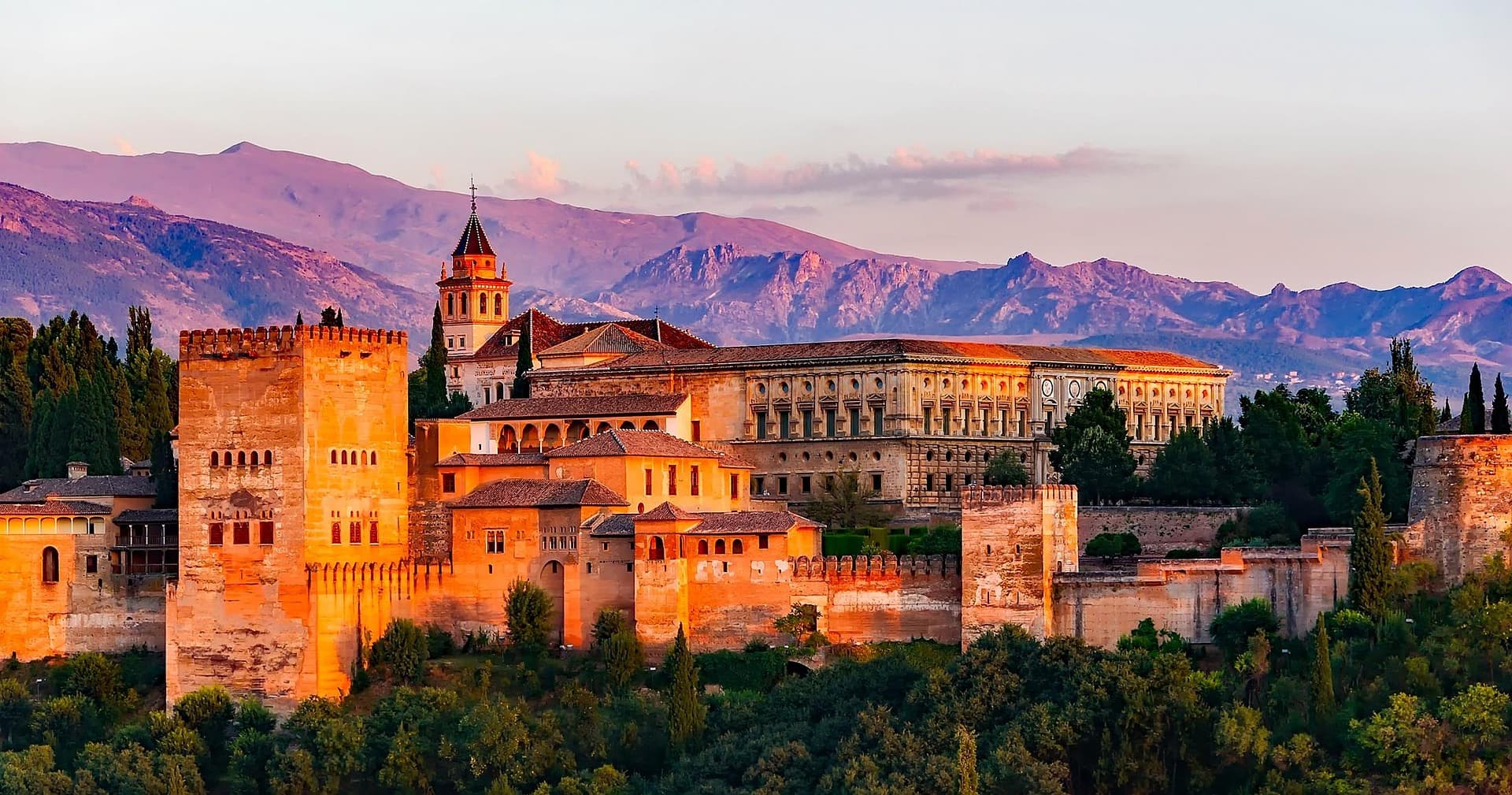
The Alcazaba is the fortress. The Torre de la Vela is the square tower whose view runs over the roofs of Granada to the plain. It is a good first or last look, and it is not the palaces. When you enter the Nasrid Palaces you are in a one-way flow that will move you. You will not linger for an hour in the Court of the Lions, even if that is the photograph you wanted to be alone with. Look up the entire time. The ceilings are the point as much as the patios: muqarnas, wood, the way light is allowed in and then stopped.
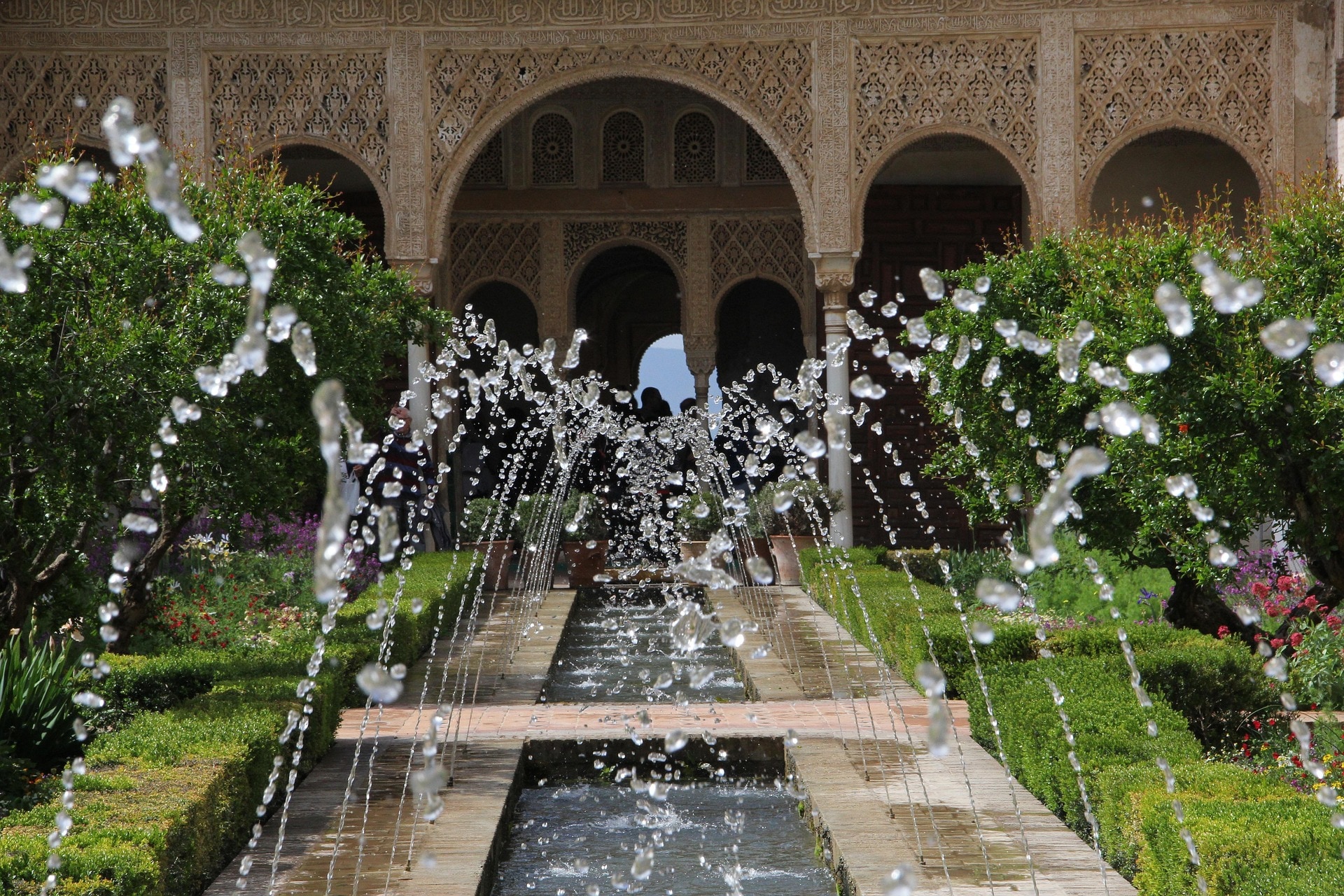
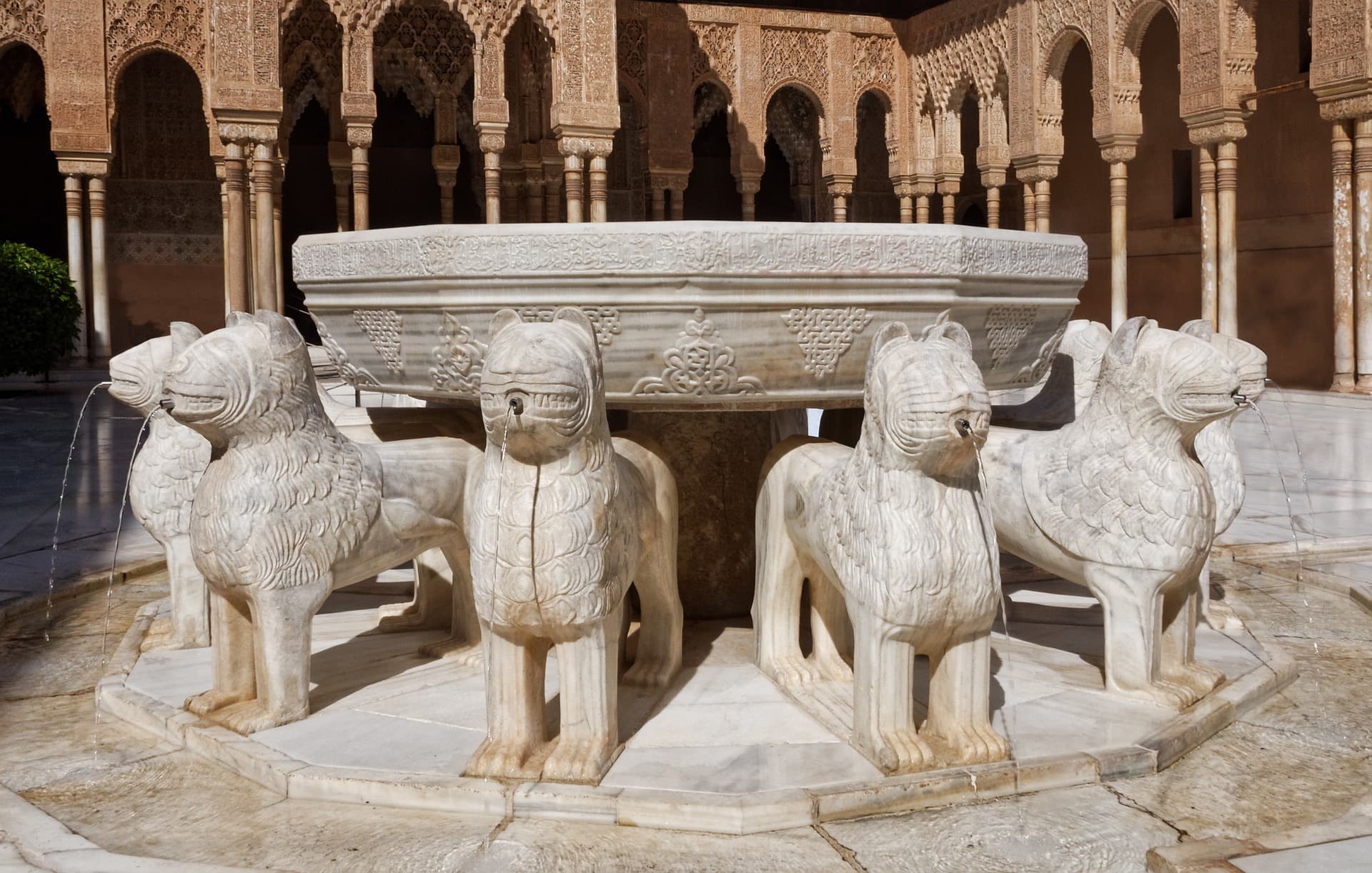
The sequence, in the order the building usually imposes, runs through the Court of the Myrtles, with the long pool, into the Hall of the Ambassadors, the throne room of the Comares palace, where the view back toward the Albaicín is the one that explains why this hill was a court and not just a castle. Later comes the Palace of the Lions: the court itself, the fountain you have seen in every book, the Hall of the Abencerrajes, the Hall of the Kings, the Hall of the Two Sisters. You are not being examined on the names. You are being asked to notice that the rooms are small, that the decoration is endless, and that the water is doing structural work, cooling and reflecting, not decorating a hotel lobby. Then you are outside again. The Partal, the pavilion and its pool, is the breath between the density of the palaces and the walk onward. Take it.
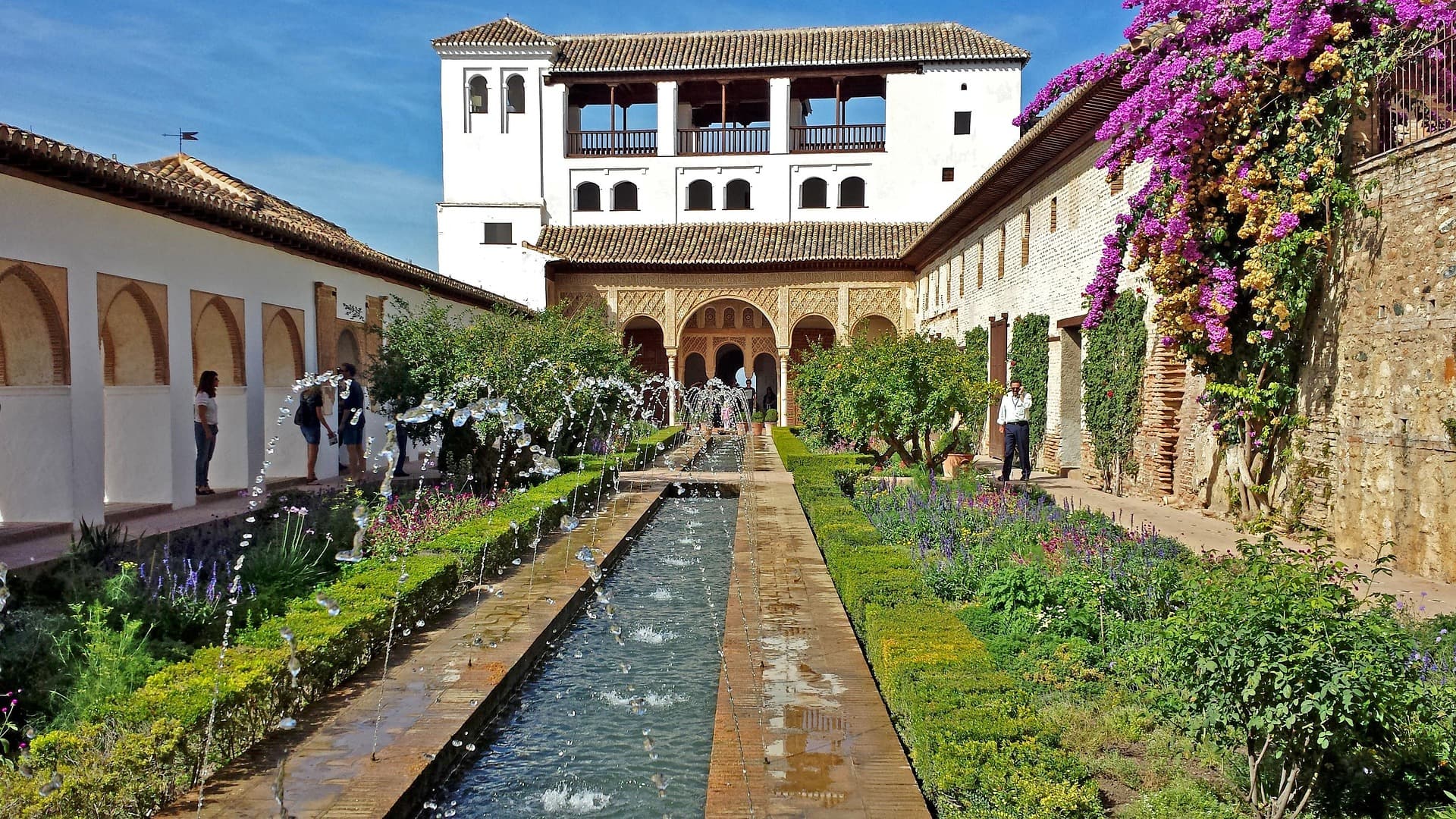
The Generalife is where you exhale. The Patio de la Acequia, the long water channel cut through a garden, is the image. The upper gardens keep going. This is the part of the visit people rush because they are hungry, and it is the part that feels least like a museum. In October the light on those hedges is a reason to have booked autumn. In July, be glad if you are here before the heat is dangerous, and do not feel obliged to walk every spur path if you are flagging. Water is in your bag. Shade is not guaranteed on the connectors between the palaces and the Generalife. The walk between them is part of the ticket and it is uphill in at least one direction no matter how you remember the map.
Night visits, and the quiet gardens
Night visits run in season and they are a different ticket. The palaces under artificial light are beautiful, and they are not a coupon for the daytime Generalife. Read what that season’s night ticket includes before you treat it as a substitute. If daytime general admission is gone and a night visit is what remains, take the night and be glad you will see the Court of the Lions at all. Then use the next morning for the gardens only if a gardens ticket is actually available, and confirm that price and that entrance rule on the patronato site rather than assuming the night ticket left the door open. It did not.
If you want quiet more than you want another viewpoint, the Generalife already leans that way once the palace flow has released you. Carmen de los Mártires, on the same hill, is the other garden: a carmen, one of Granada’s villa-gardens, often calmer than San Nicolás, with a view back toward the palaces instead of from the opposite hill. Check the day’s opening before you walk up. It is the right hour when the Alhambra itself has wrung you out and you still want trees. It is the wrong errand if you are already late for a train.
"The slot is the visit. Gardens, viewpoints, and cave shows can move. The Nasrid door cannot."— Spain 360 trip notes
The Albaicín at sunset, and Sacromonte only with a plan
The Albaicín is the old hill facing the Alhambra, and the Mirador de San Nicolás is the terrace everyone means. The walk we like starts at Plaza Nueva, along the Carrera del Darro, the street of small palaces and the sound of the river, past the Paseo de los Tristes where the bars look up at the walls. Then you climb. The lanes twist, the grade is real, and a map that looked like a ten-minute stroll becomes twenty-five. If knees are a concern, take a taxi up to San Nicolás and walk down. Do it that way rather than the reverse. Coming down the Carrera del Darro in the evening, with the palaces lit, is the version you will tell someone about.
Arrive at the mirador before the exact minute of sunset. The terrace fills, the sellers are persistent, and the view is still worth the crowd if you are not precious about silence. Watch your bag. Stay for the moment the stone turns color and then leave before you are the last tired person on a steep lane. Do not drive this. A car in the Albaicín does not get you closer to the mirador in any way that compensates for the probability of getting stuck. Residents live on these streets. You are a guest who should be on foot.
Sacromonte is the next hill, the cave quarter, and it is not a casual add after San Nicolás just because the map says it is adjacent. The paths are steeper. Some of the cave flamenco shows are a tourist product with a hard sell attached, and a “free” invitation on the mirador is how the evening gets captured. The Abadía del Sacromonte, the abbey, is a real visit if you want history and a view and you have checked the hours. A cave museum can be honest. A show can be good. None of them should be decided by a stranger who started the conversation by complimenting your shoes. If you want flamenco in Granada, decide it in daylight, with a named time, or skip it. The sunset already happened.
The Capilla Real, and the meal that comes with a drink
The Capilla Real, on Calle Oficios beside the cathedral, holds Isabel and Fernando. The Catholic Monarchs took Granada in 1492 and they are buried here, not in the cathedral next door and not in Seville. The monument chests are in the chapel; the coffins are in the crypt below, and you can look down. It is a small building and a large piece of history, and it is a morning visit on the day that is not the Alhambra. A ticket to the cathedral is separate. Confirm both prices on the official pages. Do not skip the chapel if you have any curiosity about why this city became the end of one Spain and the start of another. Do not pretend it replaces the palaces. An hour is the right size. Then coffee, and stop collecting monuments.
Granada is one of the last cities in Spain where a traditional bar often still brings a small tapa with the drink. You order a caña or a tinto de verano. Something arrives. You often do not choose it. That custom lives in ordinary bars, in the Realejo around Campo del Príncipe and the side streets off it, and in pockets away from the main terraces. It does not reliably live on the tourist terraces of Plaza Nueva, where a printed menu and a view of the square have replaced the habit. Calderería Nueva, the sloping street of tea shops, is a pleasant place for a pot of mint tea and it is not the tapa walk. Eat lunch from about 2 to 4. Eat dinner after 9. If you want to choose every plate, sit down in a restaurant and order like a restaurant. Both transactions are legitimate. Pretending a Plaza Nueva terrace owes you a free tapa is how you get annoyed at a city that tried to tell you, with the menu, what kind of room you were in.
Two nights, three if this is the point
One night is the mistake we see most. You arrive late from Córdoba or Seville, you sleep, you do the palaces in the morning because that is the slot, and you leave at noon for the coast or for Madrid. You have seen the ticket. You have not seen Granada. The Albaicín does not fit before an 8:30 a.m. security line if you also need breakfast, and it does not fit after the palaces if the car is leaving at 1. Two nights is the minimum: arrive, walk the Darro if you have daylight, sleep, palaces the next morning, long lunch, sunset at San Nicolás, sleep again, Capilla Real in the morning, and only then the train or the road.
Three nights is what we book when the Alhambra is the reason for the trip rather than a stop on the way to Málaga. One day is the palaces and the Generalife and nothing else that requires punctuality. One day is the chapel, the cathedral if you want it, and the Albaicín without a suitcase. One morning is unscheduled, which is how a slow lunch or a second walk through the Partal gardens survives contact with a departure. The AVE toward Madrid is roughly three to three and a half hours depending on the train; confirm it before you pair a morning chapel visit with an afternoon flight out of Barajas. You will not also climb Sierra Nevada.
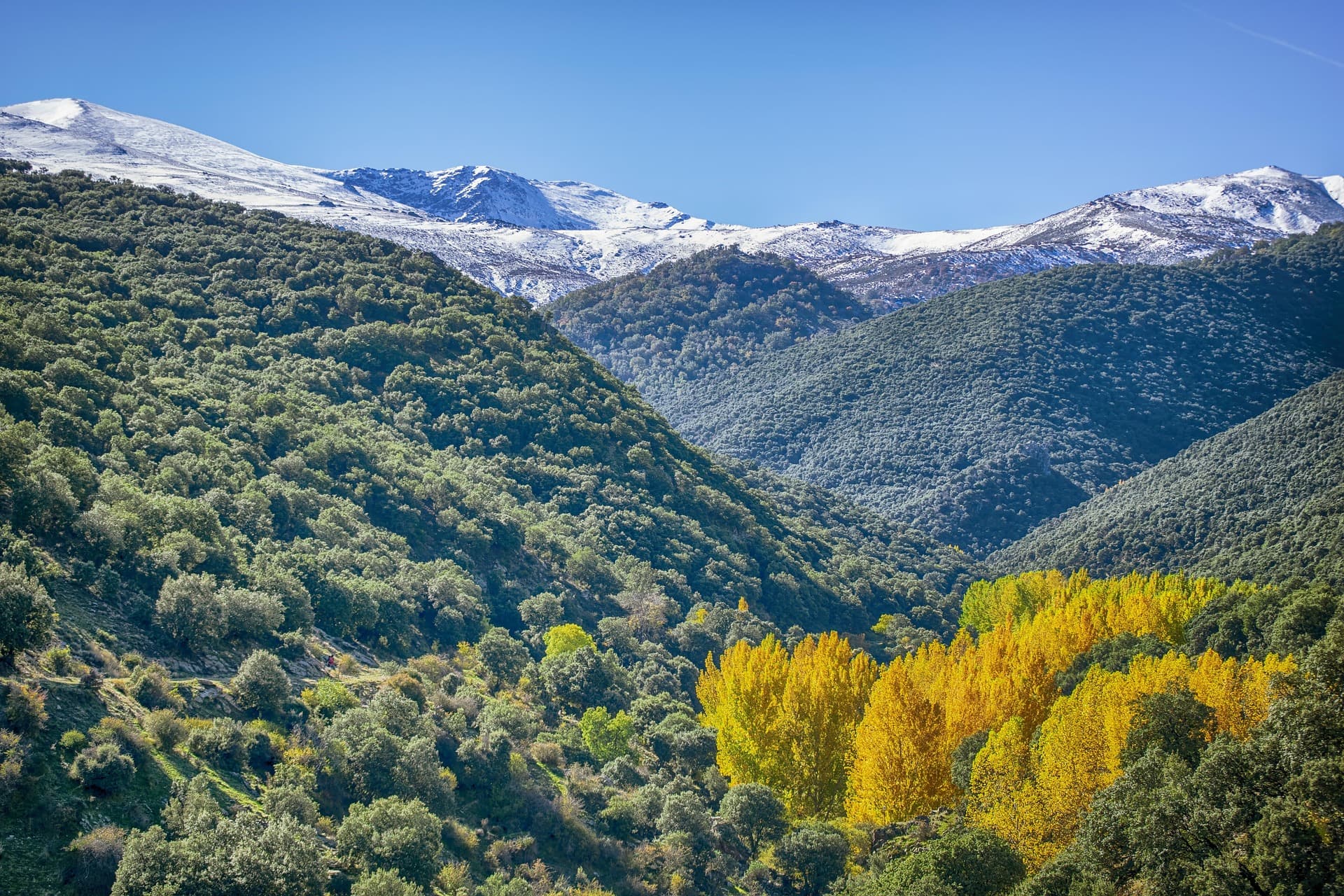
The Sierra Nevada is the backdrop. You can see snow on it from San Nicolás in the right month. The ski station is a mountain drive on the order of three quarters of an hour when the road is behaving, and longer when it is not. It is a day, in winter, for people who came to ski, and this is not a ski article. It is not an add-on hour after the Court of the Myrtles. The same is true of the Alpujarras villages on the south side of the range. They are a beautiful drive and a different itinerary. Folding them into the palace day means you do all of it badly and get back too late for the mirador, which was free and did not require a booking and which you will now miss because of a road you did not need.
Confirm the current general-visit price and the exact inclusions on the official patronato site. Take the passport that matches the booking.
| What you hold | What you can do that day | What you cannot |
|---|---|---|
| General daytime visit, morning Nasrid slot | Alcazaba, palaces, Generalife. Long lunch. Sunset in the Albaicín if you are not leaving town. | A same-day arrival from Seville. Sacromonte plus the Alpujarras plus a cave show. |
| General visit, afternoon slot | Capilla Real in the morning, lunch, then up the hill early for security. | A relaxed Generalife stroll before the slot if that stroll makes you late. The door will not wait. |
| Gardens or Alcazaba only | A walk, a view, the Generalife if that ticket includes it. Read the line items. | The Court of the Lions. Talking your way in is not a plan. |
| Night visit, in season | The palaces under lights. A different ticket. Confirm inclusions. | A sunny Acequia patio. Night does not stamp your daytime gardens. |
| No palace ticket at all | San Nicolás, the Darro, the Capilla Real, a tapa crawl in the Realejo. | Calling it an Alhambra day. Book earlier next time, weeks earlier in spring and autumn. |
- Court of the Myrtles, Hall of the Ambassadors, Court of the Lions: look up, then look at the water.
- Generalife’s Patio de la Acequia is the recovery, not a lobby you skip.
- Carrera del Darro in the late afternoon, San Nicolás before sunset, not at the peak minute if you hate crowds.
- Capilla Real on the other morning. Isabel and Fernando are here.
- Tapa with a drink in a traditional bar. A menu terrace on Plaza Nueva is a different deal.
- August day-of tickets are a queue and a hope. Spring and autumn are a booking you already made.
Granada is a small city with one door that does not forgive a casual plan. Book that door, sleep here, walk the opposite hill when the palaces are done, and eat where the drink still comes with something on a plate. The snow on the Sierra is a backdrop. The Court of the Lions is the appointment. Everything else in the day should be arranged so that you are early, fed, and not in a car on a street that was never meant to take one.
Plan Your Spain Trip
Talk with our Spain-based team about small-group departures, private itineraries, and straightforward travel from the US—we handle the details.
Contact UsRecommended Journey
Classic Andalusia
Seven private days from Seville through the white villages and Ronda into Granada for a reserved Alhambra morning, then Córdoba. The palace slot is the day the rest of the week is built around.
View the itineraryExpert's Tip
Buy the general visit on the official patronato site, weeks ahead in spring and autumn, and be at security before the Nasrid time on the ticket. The slot is the visit.
Get the Soul of Spain in Your Inbox
Join our curated list for exclusive travel stories, hidden jazz venues, and expert guides delivered once a month.