Traveling Solo in Spain
12 min read
Spain is a straightforward country to travel alone, in the ordinary way of a western European place with trains, late dinners, and busy squares. You do not need a special persona, a group of strangers you pretend are family, or a lecture about courage. You need a plan that does not change hotels every night, a way to eat that is normal for one person, and a clear eye on your bag in a crowded metro. If you want company without inventing it, our small groups cap at twelve. If you want a car to yourself, private travel is usually priced from two guests, so a solo private is a quote rather than a standard rate. Flights are not included either way. The rest of this is how to spend the days.
Company, if you want it
The Southern Spain Express is seven days. Heart of Spain & Rural Escapes is fourteen. The Grand Tour of Spain is twenty-one. All three are fixed dates, and all three stop at twelve guests. You share the guide, the vehicle, and the hotel, which is how a solo traveler stops negotiating timed tickets alone. Dinner has somewhere to land without a performance. You will not love every person in the van. You will not be sharing a bedroom with any of them. If three weeks with the same small company sounds right, take the Grand Tour. If you want a shorter test of group travel, take the Express and sleep in Seville, Córdoba, and Granada on a route that already exists.
A private tour for one is a different product. The guide and the vehicle are no longer split, and the hotel still sells a double room. We will quote it. We will not pretend it costs the same as one seat on a group departure. Couples and pairs of friends are the usual private party, from two guests. Classic Andalusia and Grand Spanish Highlights are examples of shapes we already know how to run for a private car. If you are alone and you mainly want the logistics handled, the group is almost always the saner buy. If you are alone and you need dawn, silence, or a pace nobody else shares, ask for the quote and compare it with the supplement on the Express before you decide.
The single supplement is a real number
Hotels in Madrid, Seville, Granada, and Barcelona sell double rooms. A single traveler on a small-group trip pays a supplement because the other half of that room does not vanish. Ask for the figure before you book. It changes by hotel and by date, which is why we will not print one national fee here. If the supplement is acceptable, pay it and stop worrying. If it is not, look at the private quote, or travel with a friend in a twin. We do not pair you with a stranger to save the supplement. That kind of arrangement makes a bad week for both people, and it is not how a cap of twelve is meant to work.
On the nights you are not with us, the same rule applies at the front desk. A double used by one person often costs more than half of a double, and a true single room, when the building has one, may be small and face a patio in Santa Cruz or a light well in the Eixample. Book the room you will actually sleep in. If stairs are a problem, say so before you confirm, because a beautiful old building in Seville or the Albaicín may have no elevator. That fact is annoying and ordinary. It is not a verdict on solo travel.
Eat at the bar
The barra is the normal place for one person. You stand or sit at the counter, you order, you eat, you leave. In Madrid that means you ask for what you want. A caña and a pincho de tortilla. A ración of jamón if you are actually hungry. A bocadillo de calamares around Plaza Mayor if that sandwich is the point of the walk. A table in the dining room can signal a fuller meal, and sometimes a different price. The bar does not require you to explain why you are alone. The room is full of people who came for the same reason you did: lunch.
The grammar changes by city, which matters when you are ordering for one and cannot hide inside a shared spread of plates. In Granada, a drink often brings a tapa. Walk the bars around Plaza Nueva or the Realejo, take the small plate that arrives, and move. You can eat a surprising amount this way, and you should still sit for a real lunch earlier if you want to choose the food. In San Sebastián you pay per pintxo. A Gilda and a glass of txakoli have prices. Do not expect Granada’s habit on the Parte Vieja. In Seville, salmorejo or espinacas con garbanzos at the bar is a complete solo dinner. Gazpacho is the summer soup, cold, and a poor thing to demand in January. Lunch remains the main meal. A menú del día, often somewhere in the teens of euros in an ordinary bar, gives you a first, a second, and a drink without building a banquet. Confirm the board. We will not print a national price.
Trains are the easy part
The AVE is the simplest solo tool in the country. You buy a seat with your name on it. Madrid to Seville is about two and a half hours from Atocha to Santa Justa. Madrid to Barcelona is a similar block of the day. Córdoba sits on the Madrid–Seville line and is the clean day trip or the clean stop, about forty-five minutes from Seville. The name on the ticket has to match your identification. Arrive with enough time to find the platform, especially at Atocha when several long trains are boarding. You do not need a car, a companion to share the driving, or a negotiation about who sits where. One seat, a window if you chose it, and a city at the other end.
Day trips from Madrid are how a solo week stays interesting without a new hotel. Toledo is the first one: a short train from the capital, then the old city, the cathedral, and a lunch you do not rush. Segovia is the second, for the aqueduct and a slower square, and only on a different day. El Escorial is a half day with a different, sterner mood. Aranjuez is the light option, gardens and a palace, when you want less stone and an easier return. Do not stack Toledo and Segovia into one solo date and expect to enjoy the Alcázar of either. The train makes them easy. It does not make them short once you are on foot.
- Four nights Madrid, with Toledo by train on one day and Segovia on another. You unpack once.
- Then the AVE to Seville for three nights. Córdoba is the day trip, about forty-five minutes, not a new hotel.
- Then Granada for three nights, with the Alhambra already timed and named. Ten days, three hotels.
- The opposite mistake: Madrid, Toledo, Córdoba, Seville, Ronda, Granada, and Valencia as seven hotels. That is a route for a driver and a bag handler, not for a solo self-plan.
- If the Prado is the point, stay in Madrid the whole time and take the trains. Ten nights, one room, no heroics.
- If you want the south handled for you, join the seven-day Southern Spain Express instead of inventing a private car for one.
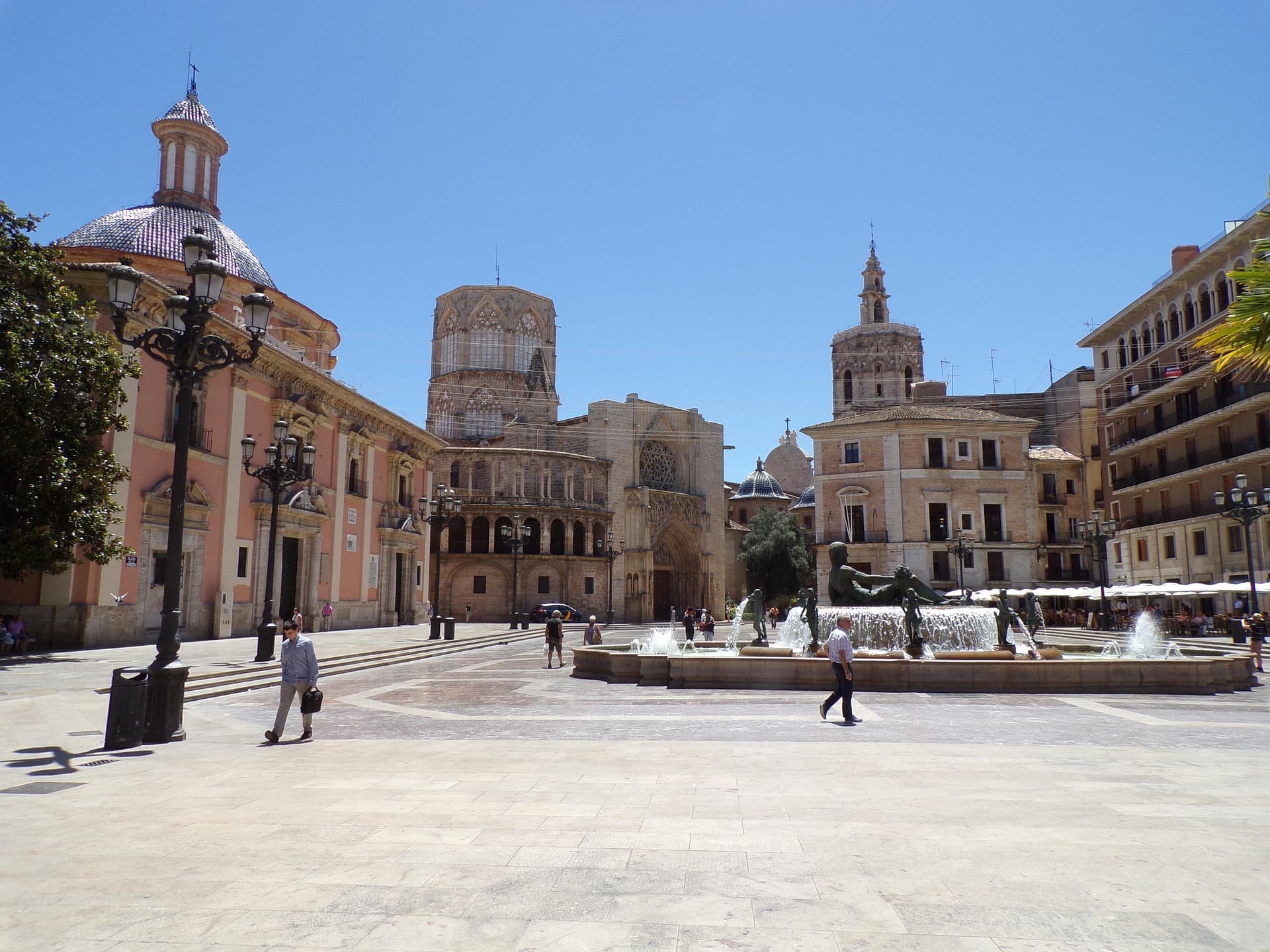
A ten-day shape that survives contact with the map
Unpack three times in ten days, or once. The trains are good. They are not the holiday.
| Plan | Where you sleep | The decision it protects |
|---|---|---|
| One base | Madrid, ten nights, near the Prado or Ópera | Toledo, Segovia, and the museums, without a suitcase in a new stairwell every day. |
| Three bases | Madrid, then Seville, then Granada | A real south without a new hotel every night. Córdoba stays a train, not a move. |
| Guided south | The Express hotels, one building per city for the group | Company, tickets, and no solo queue at the Alhambra. |
| The scramble | A new city most nights | Looks efficient on a map. Spends the week on Atocha, Santa Justa, and check-in desks. |
Granada is the city that punishes a vague solo plan. The Alhambra is a timed, named entry, and in April and through the busy autumn weeks the good hours go early. Standing in a same-day queue is how a lone traveler loses the Nasrid palaces. On a Spain 360 departure we book that ticket before you fly, and we book the Sagrada Família the same way if Barcelona is actually on your dates. If you are independent, book it yourself the day you book the flight, not the day you arrive at Plaza Nueva. The Albaicín afterward is a walk, steep and worth it, and a poor place to arrive with a suitcase and no booking. Sleep where a taxi can leave you, unless you have already chosen the lanes with your eyes open.
Ordinary safety, including on the Rambla
Spain is socially safe in the ordinary way of a western European city. The failure mode that actually happens is a picked pocket or a phone taken off a café table, not a thriller. On La Rambla in Barcelona, keep the bag in front of you and do not leave a phone on the rim of an outdoor table. In the Madrid metro, Sol and Gran Vía at rush hour are the crowded cars where a zip should be closed. The airport bus deserves the same attention you would give any airport bus. Use a taxi from a rank, or the car the hotel calls, after a late train. None of this is a reason to skip the evening. Santa Ana and the streets around Ópera in Madrid, the cathedral quarter in Seville, and Valencia’s old town are lively after dark. Lively is what you want. Empty is not the Spanish center at 10 p.m.
Women traveling alone get the same practical advice, not a separate set of fears. Spain is a normal destination. A woman at the bar in Seville at nine is not an event. Dress as you would in any large European city. The evening center is full, not vacant. If someone will not leave you alone, the bartender is the useful ally and the door is the useful exit. You do not need a companion to walk from a well-lit plaza to a well-lit hotel. You do need the bag habit on the Rambla and in a packed metro, the same as anyone else. We will not decorate this with scare copy, and we will not pretend every street on earth is a postcard. Ordinary attention, then dinner.
Meeting people without a script
Markets are the easiest public rooms. Mercado de Triana in Seville is a morning you can use. Mercado Central in Valencia is a lunch counter if you are based there. In Madrid, Mercado de San Miguel is a glass of wine and a crowd, not your education. Eat the menú in Huertas or La Latina instead, and let a market be a market. A cooking class can be booked if you want one. Say so. It is optional. We will not promise dinner in a private home with a local family, because that promise is usually theater. The social structure we actually offer is the group of at most twelve. If you wanted a family table, you are in the wrong brochure.
The other people you meet are the ordinary ones: the person on the next stool, the guide if you are with us, the desk clerk who will tell you which day the neighborhood still cooks cocido. You do not have to collect them. A solo trip fails when every hour is a task to meet someone, and it fails when you eat every meal in the hotel to avoid being seen. The bar is the middle path. One caña, one plate, the option to talk, the option to look at the room. In a group, the middle path is already built. Use it on the free evening, and use the bar on the nights you are early or late around the dates.
Money, and one backup
Carry one card you tap all day and one backup that does not live in the same pocket. Tell the bank you are in Spain so a dinner in Seville does not look like fraud. Choose euros if a terminal offers to charge you in your home currency. Your bank’s rate is the one you want. Take a small amount of cash from an ATM after you land, for a tiny bar, a market stall, or a taxi that is having a machine problem. A lost wallet should ruin an afternoon, not the Alhambra day. Keep a photo of the passport somewhere you can reach if the book is in the safe and a ticket inspector asks. On the AVE, the name match matters more than the photo. Have the card you bought the ticket with available anyway.
Lunch money is the menú, confirmed on the day, often in the teens of euros in a working bar and more when the room has a reputation. Dinner for one at the bar is a ración or two, not six tapas ordered as if a family were coming. In Granada the tapa-with-a-drink habit can make the evening cheaper and more social than a white-tablecloth restaurant, which is a decision, not a duty. If you have a dietary need, say it before a group trip so we do not sit you in front of a cocido and call it flexibility. Tortilla, cheese, and a salad are available. A traditional menu is still built on meat. The backup card does not solve that. Telling us does.
"Spain is an ordinary, sociable country to do alone. Ask the price of the single room, take the AVE with your name on the seat, and eat lunch at the bar."— Spain 360, on solo travel
Ten days is enough if you unpack rarely. Madrid with trains to Toledo and Segovia, then Seville with a Córdoba day trip, then Granada with an Alhambra ticket that already has your name: that is a solo route. The Southern Spain Express is the same south with company and a cap of twelve, if you would rather not hold the logistics. A private car for one is a quote, from a product that normally starts at two. Watch the bag on the Rambla and at Sol. Sit at the barra. Keep a second card. The evening in the center is busy, which is the safety and the pleasure at the same time. You do not need a more complicated theory than that.
Plan Your Spain Trip
Talk with our Spain-based team about small-group departures, private itineraries, and straightforward travel from the US—we handle the details.
Contact UsRecommended Journey
Southern Spain Express
Seven fixed days in the south, twelve guests at most. The short small-group route if you want company and someone else holding the Alhambra tickets.
View the itineraryExpert's Tip
Ask for the single-supplement number before you book a small-group departure, and eat at the bar when you are alone. A solo private tour is a quote, because the car is priced from two.
Get the Soul of Spain in Your Inbox
Join our curated list for exclusive travel stories, hidden jazz venues, and expert guides delivered once a month.